

1-day itinerary
One Day in Banff
Iconic lakes and mountain views in one day
- Length
- 1 day · 8 sights
- Pace
- Easy
- Estimated cost
- CA$150 per person
- Based in
- Banff
Day by day
-
Day 1: Iconic Banff Highlights: Lakes, Gondola, and Hot Springs
A curated one-day itinerary designed to maximize time in Banff National Park. This plan balances the iconic Lake Louise experience with local attractions in Banff townsite, including a gondola ride, hot springs relaxation, and historic sites. It assumes a rental car for flexibility, as public transport between Lake Louise and Banff can be time-consuming during peak seasons.
-
07:00
Early start to beat the crowds. Drive from Banff townsite to Lake Louise. The drive takes approximately 45-60 minutes via the Trans-Canada Highway and Lake Louise Lake Trail. Parking fills up extremely early, so arriving by 7:30 AM is crucial.
About 60 min
-
08:00
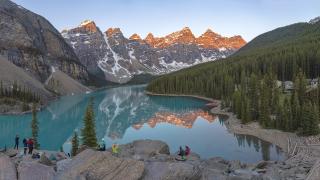
Lake Louise & Chateau Lake Louise
Explore the shores of Lake Louise and admire the turquoise waters and Victoria Glacier. Walk along the lakeshore path to the Fairmont Chateau Lake Louise for photos. This is the most iconic spot in the park.
About 2 hours
-
10:15
Drive back to Banff via Bow Valley Parkway
Return to Banff townsite. Instead of taking the highway, take the Bow Valley Parkway (Hwy 1A) for a scenic, wildlife-rich drive. Look for elk, bears, and bighorn sheep. This adds about 15-20 minutes to the drive but offers better views.
About 75 min
-
11:30
Head to the Banff Gondola at Sulphur Mountain. Take the cable car up for panoramic views of the Bow Valley. On the summit, walk the boardwalks and visit the interpretive center. Pre-booking tickets is recommended to avoid long lines.
About 60 min
-
13:00
Head down to Banff Avenue. Grab lunch at one of the many cafes or restaurants along the main street. Options range from casual burgers to upscale dining.
About 60 min
-
14:00
Banff Park Museum National Historic Site
Visit the historic museum located near the Banff Avenue entrance. It provides excellent context on the natural and cultural history of the park, featuring taxidermy and geological exhibits.
About 60 min
-
15:00
A short walk from the town center, Bow Falls is a picturesque waterfall on the Bow River. It's a quick but beautiful stop for photos.
About 45 min
-
16:00
Relax in the natural hot springs with views of the surrounding mountains. This is the perfect way to unwind after a day of walking. Note: Swimwear is required.
About 60 min
-
17:15
Drive to Johnston Canyon (approx. 15 mins from town). Hike the first section to the Ink Pots or just to the first falls. This is a moderate hike but can be shortened. If time is tight, skip this and extend time in town.
About 60 min
-
18:30
Return to Banff townsite for dinner. Banff Avenue offers a wide variety of international cuisine.
About 60 min
-
20:00
Evening Stroll on Banff Avenue
Walk along Banff Avenue, window shop, and enjoy the evening atmosphere. If it's a Tuesday, Thursday, or Saturday, the Farmers' Market might be open (check seasonal hours).
About 60 min
- Meals:
- Lunch at Banff Avenue; Dinner at Banff Avenue
- Where to stay:
- Stay in Banff townsite for easy access to restaurants, shops, and major attractions like the Gondola and Hot Springs. Options range from luxury hotels (Fairmont) to budget motels and hostels.
- Getting around:
- A rental car is highly recommended for this itinerary to efficiently travel between Lake Louise, Johnston Canyon, and the townsite. If not driving, the Roam Public Transit system connects Banff to Lake Louise and Johnston Canyon, but schedules may be limited in shoulder seasons.
-
07:00