


The Three Parts of Pacific Rim
Pacific Rim National Park Reserve on the west coast of Vancouver Island has three separate units. The Long Beach Unit, between Tofino and Ucluelet, is where almost all day hikes are found and is the part most visitors mean by "Pacific Rim." The Broken Group Islands in Barkley Sound are reached by boat or kayak, and the West Coast Trail Unit is a 75 km multi-day backpacking route covered in a separate guide.
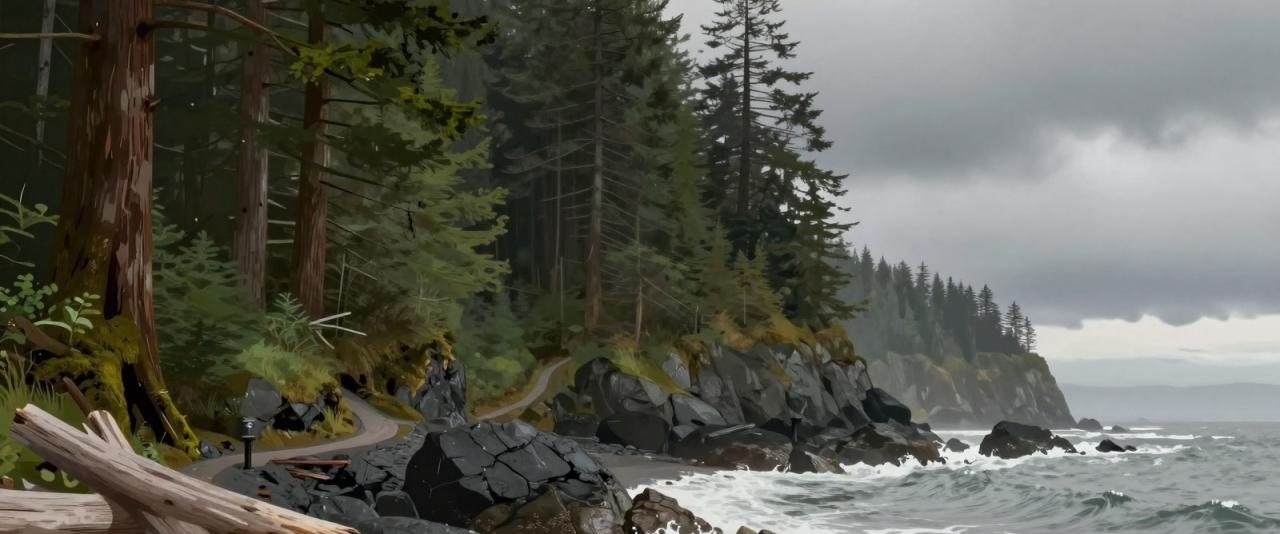
The Long Beach Unit trails are short, mostly boardwalk or packed gravel, and suitable for most fitness levels. Their appeal is the variety packed into a small area: old-growth temperate rainforest, a sphagnum bog, sheltered coves and long surf beaches.
Rainforest and Bog Trails
- Rainforest Trail A and B – two separate 1 km loops on opposite sides of the Pacific Rim Highway. Both are boardwalk with stairs and handrails through old-growth western red cedar and hemlock. Do both if you have time; each takes well under an hour.
- Shorepine Bog Trail – an 800 m boardwalk loop with benches across a bog, where stunted shore pines that may be centuries old grow only a few metres tall. It is the flattest trail in the park.
- Nuu-chah-nulth Trail – 2.5 km one way through forest between Wickaninnish Beach and Florencia Bay, with signs on Nuu-chah-nulth history and culture. It includes a steep ramp.
Beach and Cove Trails
- Halfmoon Bay Trail – 1.8 km one way including the Willowbrae Trail, with narrow boardwalk, long staircases and muddy sections leading to a remote sandy cove.
- Willowbrae Trail – 1.4 km one way on gravel with steep slopes, reaching Halfmoon Bay and the south end of Florencia Beach.
- South Beach Trail – 800 m one way from the Kwisitis Visitor Centre area to a pebble beach where big waves roll in. Parks Canada warns of strong currents here, so stay well back from the water.
- Combers Beach Trail – 500 m one way with steps down to the sand at Combers Beach. Dogs are not allowed on this trail or beach from April 1 to October 1.
Radar Hill and the Multi-Use Pathway
Radar Hill is a short, very steep paved climb of 500 m to a viewing platform looking over Clayoquot Sound. The hill takes its name from a radar station that operated there during the Cold War.
The paved multi-use pathway, called ʔapsčiik t̓ašii (pronounced ups-cheek ta-shee), runs 25 km through the park, linking beaches, viewpoints and day-use areas. You can walk, cycle or use a wheelchair or stroller on it. It is not maintained in winter, so check conditions between November and March.
Tides, Waves and Weather
The west coast of Vancouver Island receives heavy rain, especially from late fall to early spring, and trails turn muddy and boardwalks become slippery. Waterproof footwear and a rain jacket are useful in any month.
On the beaches, some creek crossings can become impassable at high tide or after heavy rain. Check tide tables before walking long stretches of sand, and be aware of rogue waves that can run much farther up the beach than earlier sets. Never turn your back on the ocean or climb on logs at the water's edge, as surf can roll them. Signs mark tsunami hazard zones and evacuation routes.
Wildlife
Black bears, cougars and wolves all live in the Long Beach Unit. Parks Canada regularly posts wildlife warnings and sometimes closes areas after encounters. Hike in groups, keep children close, and carry bear spray if you know how to use it. Keep dogs on a leash and under physical control at all times, including on beaches. Never leave food, garbage or coolers unattended at picnic sites. From the shore you may see grey whales, sea lions and bald eagles.
Park Passes and Planning
A National Park Entry Pass is required for everyone stopping in the Long Beach Unit, including for short walks. You can pay at automated machines in parking lots (credit card only) or use an annual Parks Canada Discovery Pass. Green Point Campground is the park's only front-country campground and requires reservations in summer.
Just outside the park, the Wild Pacific Trail in Ucluelet follows the rocky shoreline around the Amphitrite Point lighthouse and makes a good addition to a Pacific Rim visit. Check Parks Canada's closures page before you go, as trails sometimes close for wildlife activity, storm damage or maintenance.