




The Trail at a Glance
The West Coast Trail runs 75 km along the southwest coast of Vancouver Island, inside Pacific Rim National Park Reserve. It links Pachena Bay, near Bamfield, in the north with Gordon River, near Port Renfrew, in the south. A mid-point access at Balaats'adt (Nitinaht Village) lets hikers do roughly half the route.
The trail began as a lifesaving route for shipwrecked sailors along a stretch of coast once known as the Graveyard of the Pacific. Today it is one of Canada's best-known backpacking trips, and also one of the most demanding. Most hikers take six to eight days end to end.
Season and Reservations
The trail is open to overnight hikers from May 1 to September 30 and is closed from October 7 to April 30. Parks Canada limits the number of hikers starting each day, so reservations are essential for July and August. For 2026, reservations opened on February 5 at 8 a.m. Pacific time, online or by phone at 1-877-737-3783. Popular start dates sell out quickly, though cancellations do appear.
Groups are limited to 10 people. Parks Canada issues permits to hikers aged six and up but does not recommend the trail for children under 12.
Fees and Orientation
Expect to pay several separate charges: a national park entry fee, a backcountry use permit, a reservation fee, an orientation fee and the ferry fees. Parks Canada publishes the current amounts in its fee schedule. At Balaats'adt, a water taxi run by the local community costs $70, paid directly to the operator.
Every hiker must attend an orientation before starting. Sessions run daily at 10 a.m. and 2 p.m. at the Gordon River and Pachena Bay trailheads, and at 7 a.m. at Balaats'adt. You receive tide tables and a trail map there.
Terrain: Ladders, Cable Cars and Beaches
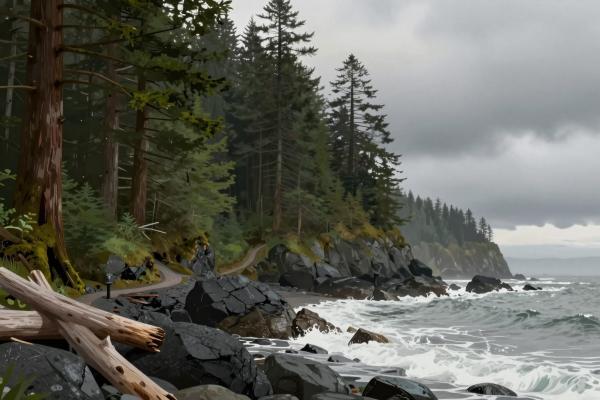
The trail alternates between rough forest sections and beach walking. Expect deep mud, slippery roots, fallen logs and boardwalks with missing planks. There are more than 100 ladder systems, some very tall, and rungs are sometimes missing. Several rivers are crossed by cable cars that you pull yourself across; only two people with their packs may ride at once, and a car out of service can make a crossing difficult.
Two crossings use ferries: the Gordon River ferry at the south trailhead and the Nitinaht Narrows ferry midway. Both run daily from May 1 to October 7. The southern half, starting from Gordon River, is generally considered harder because of its ladders and steep forest. Many hikers start at Pachena Bay so the easier northern section comes first, while their pack is heaviest.
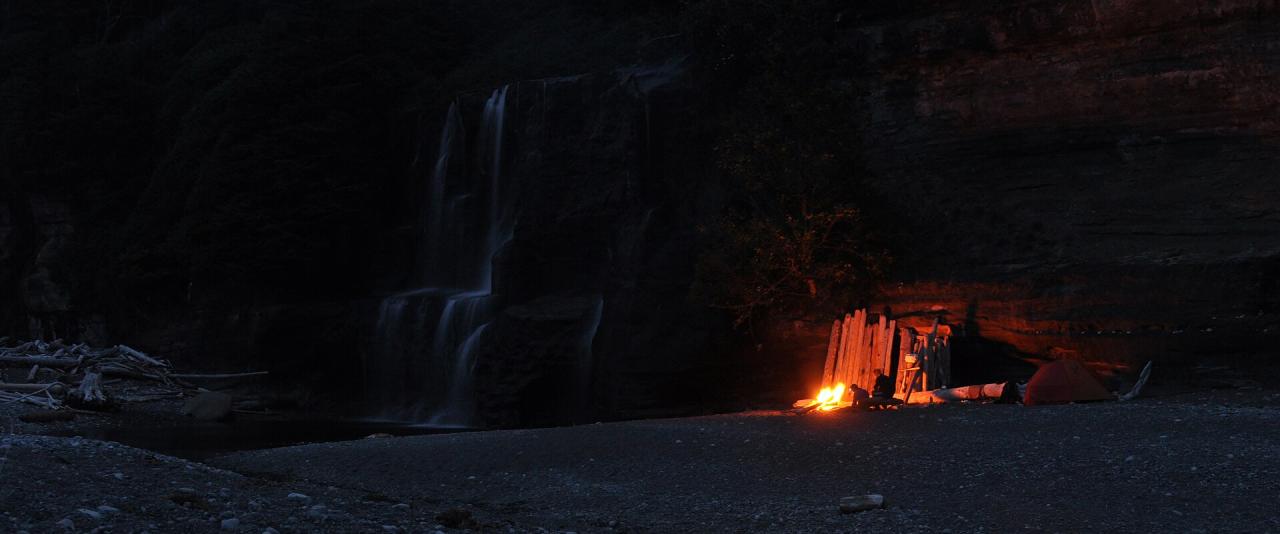
Camping is on designated beaches and riverbanks, many beside waterfalls such as Tsusiat Falls, with outhouses and food storage lockers at most sites.
Tides and Surge Channels
Some beach sections are only passable at low tide, and surge channels and headlands can trap hikers. Plan each day around the tide tables, carry them with your map, and check current levels at waterlevels.gc.ca before setting out. Waves can run far up the beach without warning, so keep a safe distance from the water's edge.
Safety and Evacuations
Parks Canada reports that 60 to 80 hikers each season suffer injuries serious enough to require evacuation, most often sprained ankles, knee injuries and falls. Help can take up to 24 hours to arrive. Reduce the risk by:
- Training with a loaded pack on rough terrain before the trip
- Keeping pack weight as low as possible
- Wearing broken-in boots with good ankle support
- Carrying a first-aid kit, water treatment and layers for rain and cold
- Bringing a satellite communicator, since there is little or no mobile coverage
Black bears, cougars and wolves live along the coast. Use the food lockers, cook away from your tent and keep a clean camp.
Getting to the Trailheads
Pachena Bay is reached via a long gravel logging road to Bamfield, and Gordon River is close to Port Renfrew on paved highway. Because the trail is linear, most hikers either leave a car at one end and arrange transport back, or use a private trailhead shuttle; Parks Canada's trip-planning pages list transport options. Book transport at the same time as your permit, and check current road conditions on the Bamfield road.