






The Route in Brief
The Lighthouse Route is a signed scenic drive along Nova Scotia's South Shore, running about 585 km between Halifax and Yarmouth. It follows Trunk 3 and a series of smaller coastal roads, with Highway 103 as the faster inland link. Along the way are fishing villages, island-dotted bays and several lighthouses that are easy to visit.
Summer, from late June to early September, is the best time to drive it. Museums, lighthouse gift shops and seasonal restaurants are open, ferries and boat tours run, and days are long. Expect fog on the coast, especially in the morning, and cool evenings even in July. Allow three to five days to drive it without rushing, or use Halifax as a base for the eastern section.
Peggy's Cove
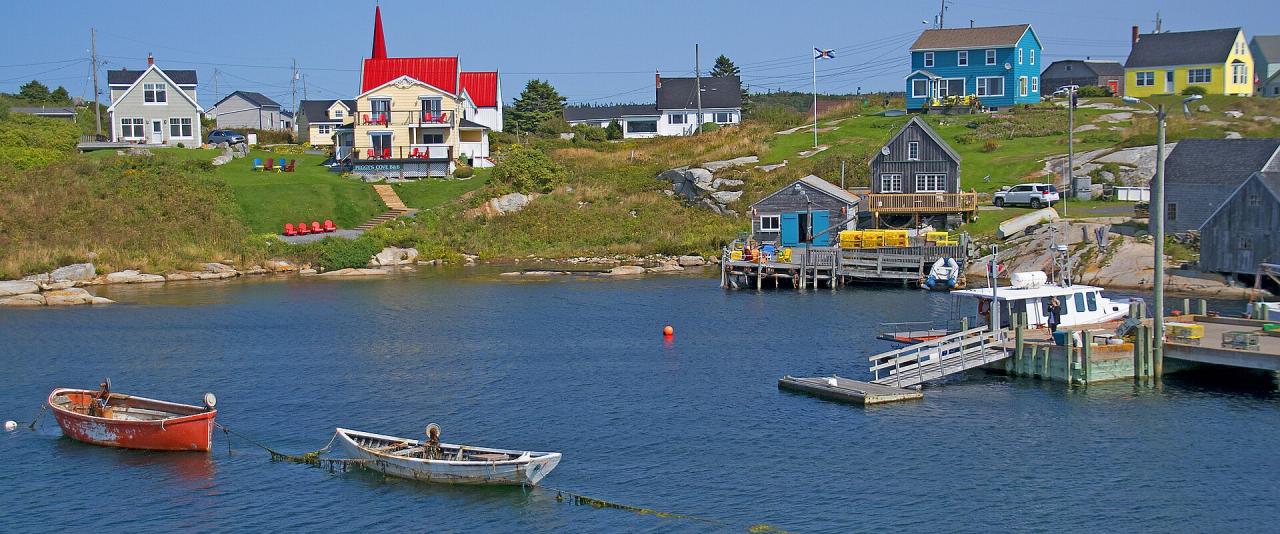
Peggy's Cove is the first major stop, a small fishing village on granite rock southwest of Halifax. Its lighthouse, Peggy's Point Lighthouse, is an octagonal concrete tower built in 1914 that remains an active navigation aid. A viewing deck opened in 2021 to improve accessibility and give visitors a place to see the lighthouse and sea without climbing on the rocks.
Take the warnings seriously. The dark, wet rocks near the water are slippery, waves can surge unexpectedly, and people are swept off them most years. Stay on the white rock and the viewing deck. Arrive early in the morning or in the evening to avoid tour-bus crowds at midday.
Chester, Mahone Bay and Lunenburg
West of Peggy's Cove, the road passes Hubbards and the Aspotogan Peninsula before reaching Chester, a sailing village on Mahone Bay. Mahone Bay itself is known for the three churches that line its waterfront, a classic photo stop.
Lunenburg, a few minutes further on, is the highlight for many visitors. Old Town Lunenburg was inscribed as a UNESCO World Heritage Site in 1995 as one of the best-preserved examples of a planned British colonial settlement in North America, with its original 18th-century grid and brightly painted wooden buildings. The Fisheries Museum of the Atlantic is on the waterfront. Lunenburg is also the home port of the schooner Bluenose II when it is not touring. Parking in the old town is tight in July and August, so park once and walk.
From Lunenburg, a side trip along the LaHave River and out to Riverport gives quieter coastal scenery and small beaches.
Liverpool and Fort Point
Liverpool, in Queens County, sits at the mouth of the Mersey River. Fort Point Lighthouse, built in 1855, is one of the oldest surviving lighthouses in Nova Scotia. It stands in a small park at the end of the harbour, and its museum, gift shop and short tower are open to the public in summer.
West of Liverpool, the route offers access to sandy beaches. Summerville and Carters Beach are well-known options; check parking and access rules locally, as some beaches have limited space. The ocean stays cold here even in August.
Shelburne and Barrington
Shelburne was founded by Loyalists in the 1780s, and its waterfront historic district has several preserved 18th-century buildings and small museums. It makes a good overnight stop between Lunenburg and Yarmouth.
Past Shelburne, the route continues through Lockeport, Barrington Passage and the side roads of Cape Sable Island. This stretch is less visited and gives a sense of working Nova Scotia fishing communities, with wharves full of lobster boats.
Yarmouth and Cape Forchu
Yarmouth marks the western end of the route. Just outside town, Cape Forchu Lighthouse stands at the harbour entrance. The current concrete tower, nicknamed the "apple core" for its shape, replaced the original station in the early 1960s. The Friends of the Yarmouth Light Society runs a museum and gift shop in the keeper's house, and the rocky headland has walking paths with views of the Gulf of Maine. The original Fresnel lens is displayed at the Yarmouth County Museum in town.
From Yarmouth you can return to Halifax quickly on Highway 103, or continue north on the Evangeline Trail through the Acadian shore and the Annapolis Valley to make a loop.
Practical Tips
- Driving: Trunk 3 is slow and winding through villages. Use Highway 103 when you need to make time, and drop back to the coast for the scenic sections.
- Booking: Accommodation in Lunenburg, Mahone Bay and Peggy's Cove area fills up in July and August. Book ahead.
- Weather: Pack layers and rain gear. Fog can hide the coast for hours, so keep a flexible plan.
- Lighthouse visits: Most lighthouse museums open only in summer; confirm opening days before making a detour.
- Fuel and services: Fill up in larger towns such as Bridgewater, Liverpool, Shelburne and Yarmouth.