


What Autumn Looks Like in Stanley Park
Stanley Park covers about 400 hectares at the edge of downtown Vancouver and opened in 1888. Most of the park is coastal forest of Douglas fir, western red cedar, western hemlock and Sitka spruce, which stay green all year. Autumn colour comes from the deciduous trees mixed in among them and planted around the park's lakes, lawns and gardens: maples, alders, cottonwoods and ornamental trees that turn yellow, orange and red.
The result is a contrast of dark evergreens and bright leaves rather than a solid wall of colour. Colour usually builds through October and peaks from mid-October into early November, depending on the weather. Autumn storms can bring down leaves quickly, so check the forecast and go on a dry day after a calm spell if you can.
Lost Lagoon
Lost Lagoon, at the Georgia Street entrance near the West End, is the easiest place to start. It is a 17-hectare freshwater lake, created between 1913 and 1916 and now a bird sanctuary. A level path of about 1.75 km loops around it, with deciduous trees along the shore whose leaves reflect in the water on still days. The lagoon is a good spot for waterfowl and herons, and the Stanley Park Nature House on its shore offers information about the park's ecology.
Beaver Lake and the Forest Trails
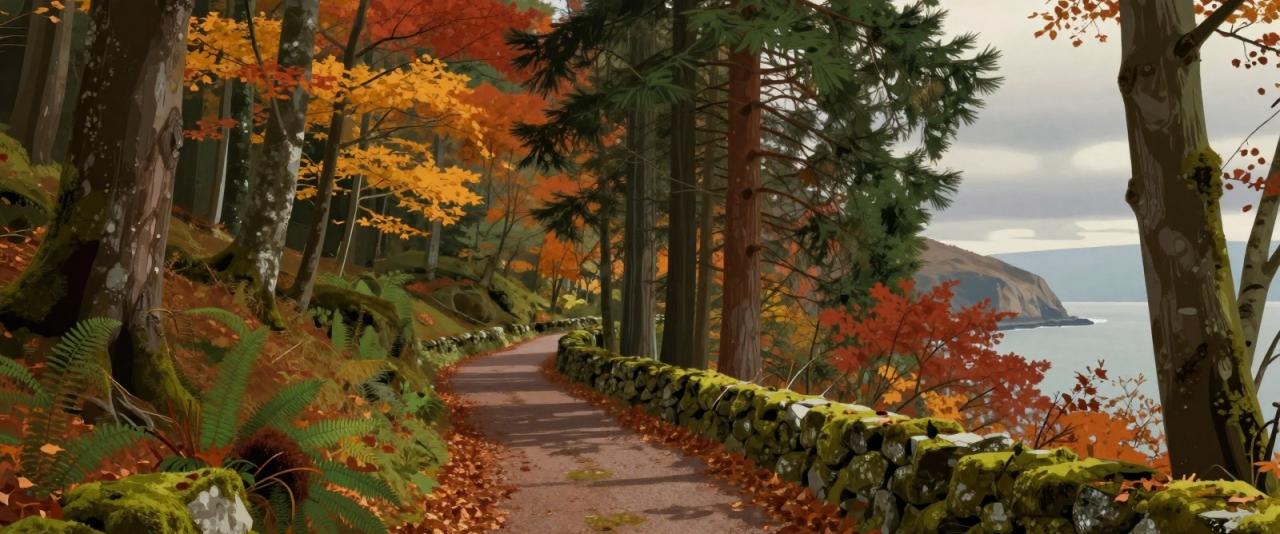
Stanley Park has more than 27 km of forest trails. Beaver Lake, in the centre of the park, is a small lake almost covered with water lilies and surrounded by forest. The trail around it is short and quiet, and the mix of yellowing deciduous trees, lily pads and tall conifers makes it one of the most atmospheric autumn walks in the park.
Trails such as Lovers' Walk, Tatlow Walk and the Rawlings Trail connect Lost Lagoon, Beaver Lake and the seawall. The paths are generally well marked, but they can be muddy after rain, and fallen leaves make wooden boardwalks and bridges slippery. Forest maintenance work sometimes closes sections of trail, so follow posted detours.
The Seawall
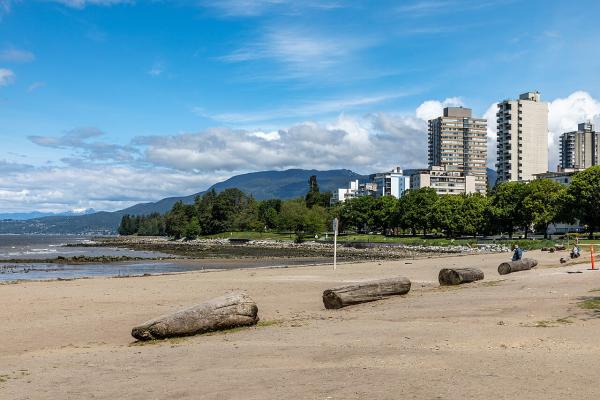
The seawall runs about 8.8 km around the park, part of a much longer waterfront path. On the walk you pass Brockton Point and its lighthouse, the totem poles at Brockton Point, Siwash Rock and Third Beach, with views across to the North Shore mountains and English Bay. The seawall itself is mostly bordered by rock and forest, so it is better for views than for leaf colour, but the stretches near Lost Lagoon and the gardens have plenty of autumn trees.
Walkers and cyclists use separate lanes. The cycling and skating lane runs one-way, counter-clockwise around the park. Bike rentals are available in the West End near the park's entrance.
Gardens Near the Park Entrance
Several planted areas near the Georgia Street and Pipeline Road entrances add colour in autumn. The Ted and Mary Grieg Rhododendron Garden, near the Stanley Park Pitch and Putt, has many ornamental trees whose foliage turns in October. The Stanley Park Rose Garden is past its main bloom by autumn, but its surroundings are still pleasant for a short walk. Nearby lawns with large deciduous trees give open views of the colour.
Suggested Autumn Walking Route
A loop of two to three hours covers most of the park's autumn highlights:
- Start at the Georgia Street entrance and walk around Lost Lagoon.
- Follow forest trails to Beaver Lake and walk its loop.
- Continue to the seawall at Prospect Point or Siwash Rock, then walk the seawall back toward English Bay.
- Finish along the West End's tree-lined residential streets, which also turn colour in autumn.
Practical Tips
- Rain: Vancouver's rainy season begins in October. Waterproof jackets and shoes make the trails far more pleasant.
- Daylight: Days shorten quickly in late October and early November, so start early and avoid forest trails after dark.
- Getting there: The park is walkable from downtown and the West End, and city buses stop near the Georgia Street entrance. Parking in the park is paid.
- Wildlife: Coyotes and raccoons live in the park. Never feed wildlife, and keep dogs on leash where required.