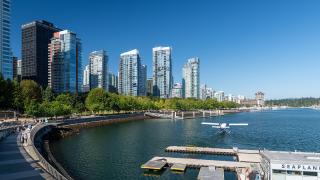



Vancouver has a run of sandy beaches along English Bay and the shore of Point Grey, most of them within a bus ride or a cycle along the seawall from downtown. The water is the Salish Sea, so it is cold even in August, and the beaches are as much for walking, sunsets and picnics as for swimming. This guide covers the main beaches from downtown westward, plus what to check before you get in the water.
Downtown and Stanley Park: English Bay, Second and Third Beach
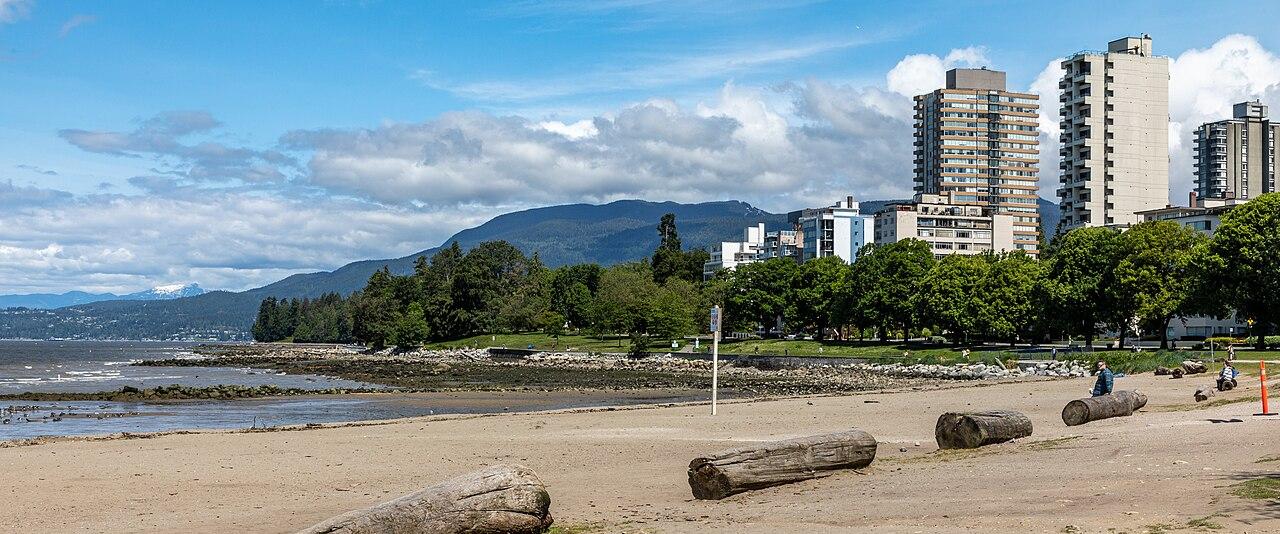
English Bay Beach sits at the foot of Denman and Davie streets in the West End, which makes it the easiest beach to reach from downtown hotels. It is a city beach in the full sense: busy seawall, food on Denman Street, big logs on the sand to lean against, and some of the best sunset views in the city. It is also the main viewing spot for summer fireworks events, so expect crowds on those nights.
A short walk north along the seawall, Second Beach is on the edge of Stanley Park, with grass, a playground and the Second Beach outdoor pool next to the sand. Third Beach, further along the park's western shore, is quieter, backed by forest, and faces west for sunsets. Parking in Stanley Park is paid, and spaces near both beaches fill on warm weekends.
Kitsilano Beach
Kitsilano Beach, across False Creek on the south shore, is the city's most active beach. It has volleyball courts, tennis courts, a large grassy park behind the sand and views back to the downtown skyline and the North Shore mountains. It draws a young, sporty crowd on summer weekends. You can reach it on foot or by bike over the Burrard Bridge, or by bus from downtown.
Jericho, Locarno and Spanish Banks
West of Kitsilano the shore becomes a long, continuous stretch: Jericho Beach, Locarno Beach and Spanish Banks (East and West). These are wider, flatter and calmer than the downtown beaches, with more room to spread out and long views across the water to the mountains.
At low tide Spanish Banks exposes huge tidal flats, and you can walk a long way out across the sand. Families like this stretch for wading and for its grassy picnic areas. Locarno is traditionally the quietest of the group. Jericho, next to the sailing centre and a park with ponds and trails, is a good choice if you want a walk as well as a beach. Parking lots run along the shore road, but they fill on hot days, and the further west you go the fewer bus options you have.
Wreck Beach
Wreck Beach is different. It lies below the cliffs at the tip of Point Grey, next to the University of British Columbia, inside Pacific Spirit Regional Park, which Metro Vancouver manages. It is reached by steep trails and long flights of stairs down the bluff, so it suits people comfortable with a stiff climb back up.
Its best-known section is clothing-optional, and that stretch is clearly signed. The beach is wild compared with the city beaches: no lifeguards, logs and sand rather than lawns, and a sunset view straight out over the Strait of Georgia. Bring water and anything you need, and leave before dark so you are not climbing the stairs without light.
Lifeguards and Swimming Safety
The City of Vancouver's lifeguard season runs through the summer, roughly from the Victoria Day weekend in May to Labour Day in September. For 2026 the Park Board kept lifeguards at nine ocean beaches: English Bay, Second Beach, Third Beach, Sunset, Kitsilano, Jericho, Locarno, Spanish Banks East and Spanish Banks West. Trout Lake, the inland lake beach in East Vancouver, was left without lifeguards. The board had earlier proposed cutting the list to five, and funding for 2026 came from a one-time reallocation, so check the city's beach pages for the current list and daily hours before you plan a swim.
Swim near a lifeguard station when one is staffed. The water is cold enough to cause cold shock, especially early in the season, and tides change the beach a lot on the flatter western shore. Watch children closely on the Spanish Banks flats, where the tide comes back in across a wide area.
Water Quality Advisories
Vancouver Coastal Health samples the water at the city's swimming beaches through the swim season (roughly May to September) and judges results against the Canadian Recreational Water Guidelines. When bacteria levels are too high, a swimming advisory is posted for that beach and signs go up on site. Results are published online through Vancouver Coastal Health, and the Swim Guide app and website also show recent results per beach.
Advisories are more common after heavy rain and on the inner-harbour and False Creek side than on the open western beaches, but any beach can get one. Check the latest status on the morning you plan to swim, and if an advisory is posted, enjoy the sand and stay out of the water.
Practical Tips
- Getting around: The seawall connects English Bay, Second and Third Beach and, via the Burrard Bridge, Kitsilano. A bike is the easiest way to beach-hop.
- Timing: Mornings are quietest. On hot weekend afternoons, parking at Kitsilano and Spanish Banks is the main problem.
- Sunsets: English Bay, Third Beach, Spanish Banks and Wreck Beach all face west.
- Rules: Check posted signs for rules on dogs, fires and alcohol. They differ by beach and change over time.
- Layers: Even on hot days the breeze off the water can be cool by evening.