
- Admission
- Free
- Hours
- Open all day
- Where
- Whitehorse, Yukon
- Directions
- Directions
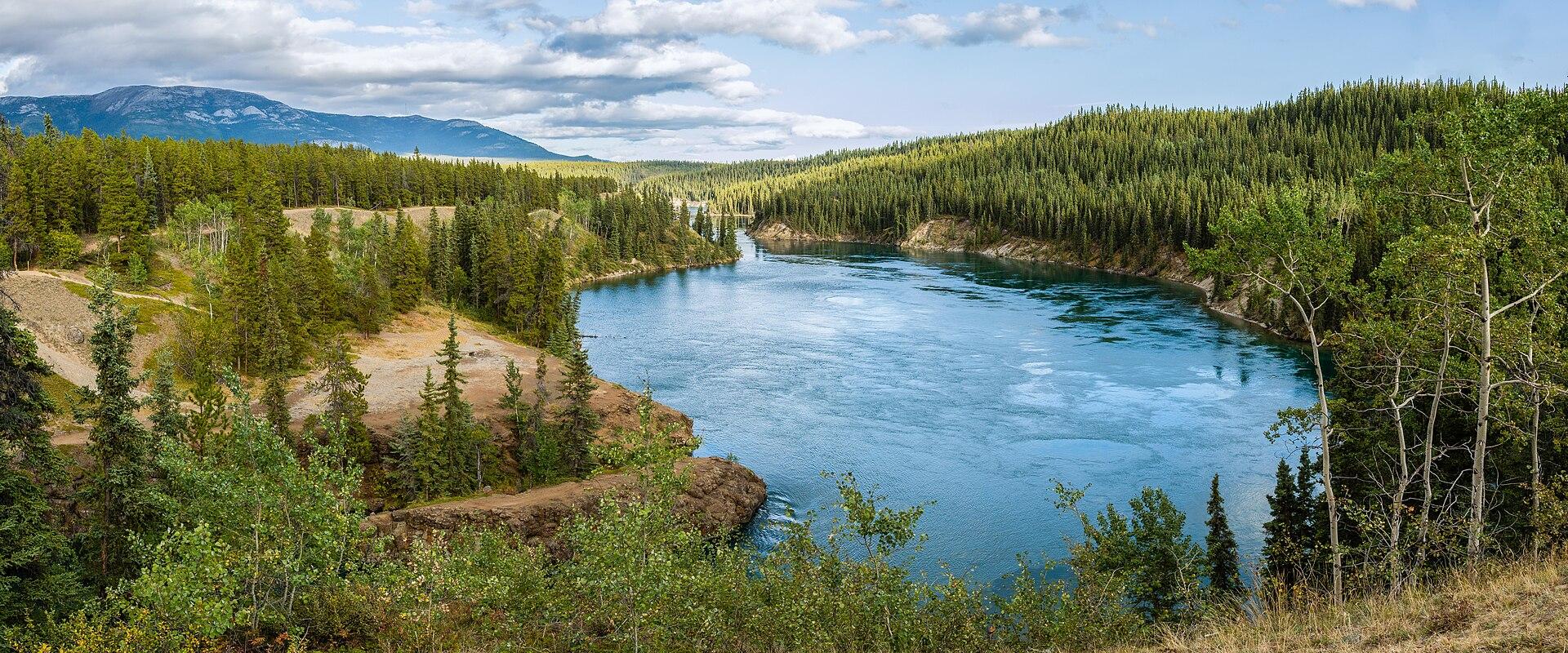
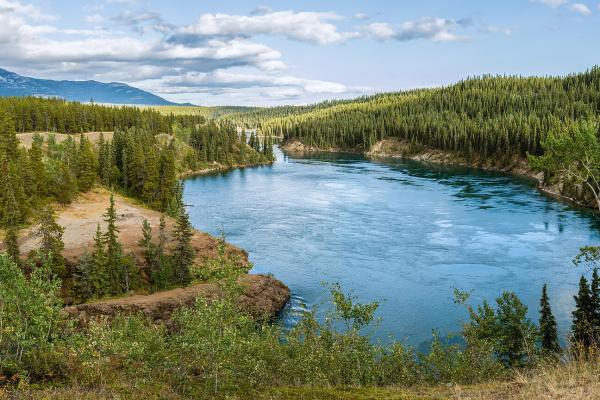
Miles Canyon is a narrow gorge on the Yukon River just upstream of Whitehorse, Yukon, where the broad river is squeezed between steep walls of dark volcanic rock. The water below is a vivid blue-green, the cliffs rise tens of metres above it, and a historic suspension bridge crosses the gap, giving one of the best-known views in the territory. The canyon is within a few minutes of downtown, and it is free to visit at any time.
The rock is basalt, the product of lava flows that spread across this part of the Yukon millions of years ago. Over time, the river cut down through the hard layers, carving the canyon and leaving columns and ledges that stand above the water. Swallows and other birds nest on the cliffs, and spruce and aspen cover the slopes above. The colour of the water, which comes from fine glacial sediment in the river mixed with the light, changes with the season and the sun.
The canyon played a dramatic part in the Klondike Gold Rush. In 1898, thousands of prospectors reached the upper Yukon after crossing the passes from Alaska and built or bought boats to float down to Dawson City. Miles Canyon and the Whitehorse Rapids just below it, whose churning waves were said to look like the manes of white horses and gave the town its name, wrecked many boats and drowned several people. The explorer Frederick Schwatka named the canyon for General Nelson Miles in 1883. The North-West Mounted Police eventually regulated traffic, requiring that boats be inspected and that experienced pilots guide them through, and a tramway was built at Canyon City, a small settlement beside the canyon, to carry cargo around the worst of the rapids. Today only traces of Canyon City remain, and signs explain the story. The rapids themselves were drowned in the 1950s when a hydroelectric dam raised the river.
The Robert Lowe Suspension Bridge, built in the 1920s, is the main viewpoint. It is a pedestrian bridge, and from its deck you can look straight down the canyon and out over the river. A paved road on the south side leads to a parking area near the bridge, while a gravel road reaches the north side, and the Millennium Trail connects the area to the town for walkers and cyclists. Winter conditions may close gates or make roads icy, so check access before driving. Trails follow the river and climb to lookouts, and in winter some are used for skiing and snowshoeing.
Visitors can allow an hour for the bridge and a short walk, or a half day for a longer loop with the Canyon City site. Wear sturdy shoes, keep children close near the cliff edges and bring insect repellent in summer. The canyon suits walkers, photographers, history lovers and anyone who wants a quick taste of the Yukon’s wild scenery near town.
Categories
More photos coming soon
Hours & Fees
- Open
- Open all day
- Admission
- Free
Hours and prices change, especially out of season. Check with the venue before you go.
Nearby Attractions
Other places to visit in Whitehorse
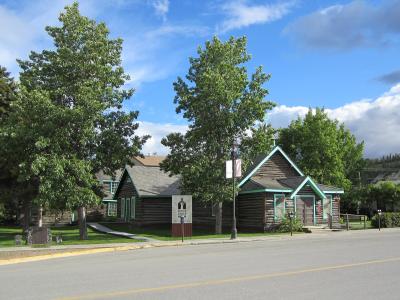
Christ Church Cathedral
Anglican cathedral in downtown Whitehorse
Architecture · Churches
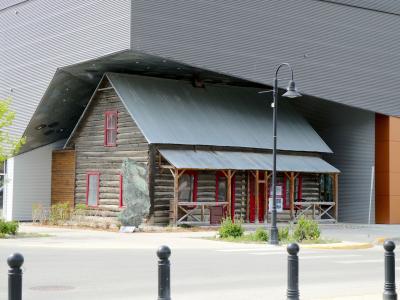
MacBride Museum of Yukon History
Yukon history, First Nations, and gold rush artifacts
History & Heritage
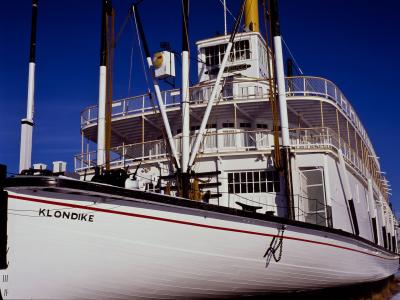
SS Klondike National Historic Site
Historic sternwheel steamboat on the Yukon River
Coastal & Maritime
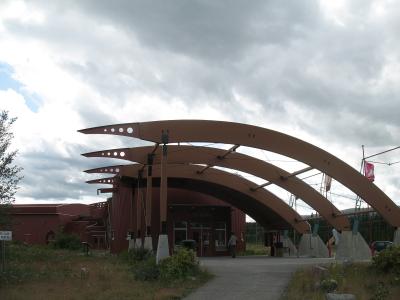
Yukon Beringia Interpretive Centre
Ice Age exhibit on Beringia land bridge
Educational Sites · Museums
Questions people ask
Quick Facts
Best Time to Visit
June through September offers long daylight and the broadest access; winter requires cold-weather preparation.