



Why Lunenburg Is Different
Lunenburg sits on a natural harbour on Nova Scotia's South Shore, about 100 km southwest of downtown Halifax, or roughly an hour's drive. It was founded in 1753 as one of the British government's first planned settlements for Protestant colonists, many of them from German-speaking parts of Europe, and it took its name from the Duke of Brunswick-Lüneburg, who was also King George II.
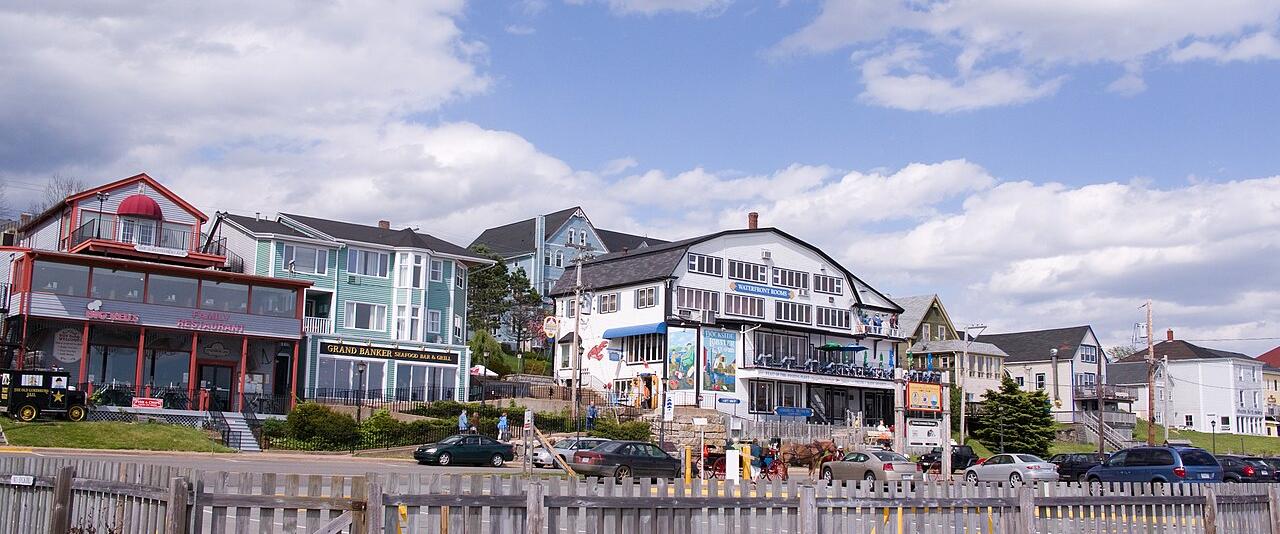
In 1995 Old Town Lunenburg was inscribed as a UNESCO World Heritage Site, described as the best surviving example of a planned British colonial settlement in North America. The streets still follow the original rectangular grid, laid out in compact lots without regard for the steep hillside. Most of the wooden buildings date from the 1800s. It is also a working town of about 2,400 people, with a fish-processing industry that still employs many residents.
Walking the Old Town
The Old Town is small enough to cover on foot, but the streets climb steeply from the harbour, so wear good shoes. The waterfront warehouses, many painted in deep red, are the most photographed view; for the classic picture of the town, look back across the harbour from the golf course side.
Look for the local architectural signature, a projecting dormer over the front door known as the Lunenburg bump. Notable buildings include:
- St. John's Anglican Church, built in 1763 in a Carpenter Gothic style. It was badly damaged by fire in 2001 and restored using traditional methods.
- Zion Evangelical Lutheran Church, a large wooden church from 1890.
- Knaut-Rhuland House (1793), now a museum run by the Lunenburg Heritage Society, open seasonally.
- Lunenburg Academy, the large black-and-white school building on the hill above town.
Fisheries Museum of the Atlantic
The Fisheries Museum of the Atlantic occupies former fish-plant buildings on the waterfront. Its exhibits cover the offshore schooner fishery that built the town's wealth, rum-running and the lives of fishing families, and visitors can board vessels tied up at its wharf. It operates mainly in the warmer months, so check its season and admission before planning a visit outside summer.
Bluenose and Bluenose II
The original Bluenose, built in Lunenburg in 1921 by the Smith and Rhuland yard, was a fishing and racing schooner that became a Canadian symbol and still appears on the ten-cent coin. Bluenose II, a replica, was launched in Lunenburg in 1963 and later rebuilt; it returned to the water in 2013. Owned by the province, it acts as a sailing ambassador for Nova Scotia and does not race.
When Bluenose II is in its home port at the museum wharf, it offers deck tours and harbour sailings in summer. It also travels to festivals and other ports, so check its published schedule before building a trip around it.
Arts, Food and Events
Lunenburg has a strong arts scene, with galleries and craft studios in the Old Town and a small opera house built in 1909 that hosts concerts. The Lunenburg Folk Harbour Festival, founded by local musician Bill Plaskett, brings folk and roots music to town each summer.
Seafood is the obvious choice for meals, particularly scallops, haddock and lobster. Ironworks Distillery operates in a former marine blacksmith's building near the waterfront. Restaurants and shops are busiest from late June to early September, and some close or cut hours between late fall and spring.
Day Trips Nearby
- Mahone Bay is about a 10-minute drive and known for its three churches standing side by side along the water.
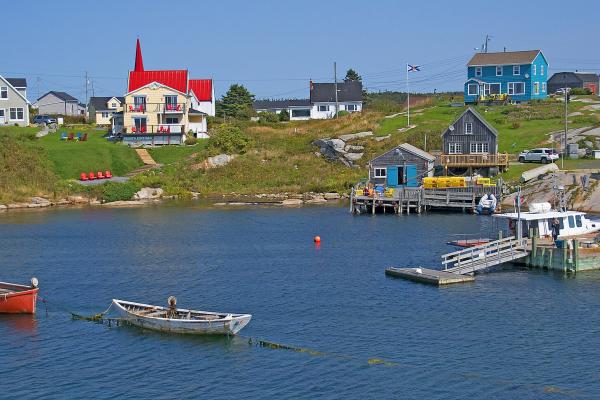
- Blue Rocks, a few minutes east of Lunenburg, is a small fishing community of rocky shoreline and fish shacks, good for walks and sea kayaking.
- Peggy's Cove can be combined with Lunenburg on a drive from Halifax, though the two make a long day together.
Practical Tips
There is no scheduled public transit to Lunenburg from Halifax, so most visitors drive or join a tour. Parking in the Old Town can be tight in summer; park once and walk. Fog is common in early summer, while September and early October often bring clearer weather and fewer crowds. Book accommodation early for July and August, when the town's inns and guesthouses fill up.