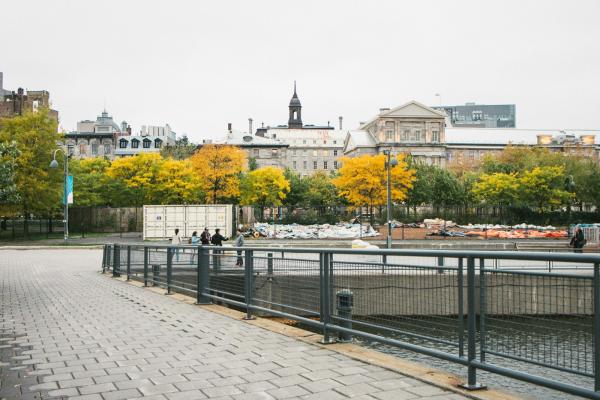


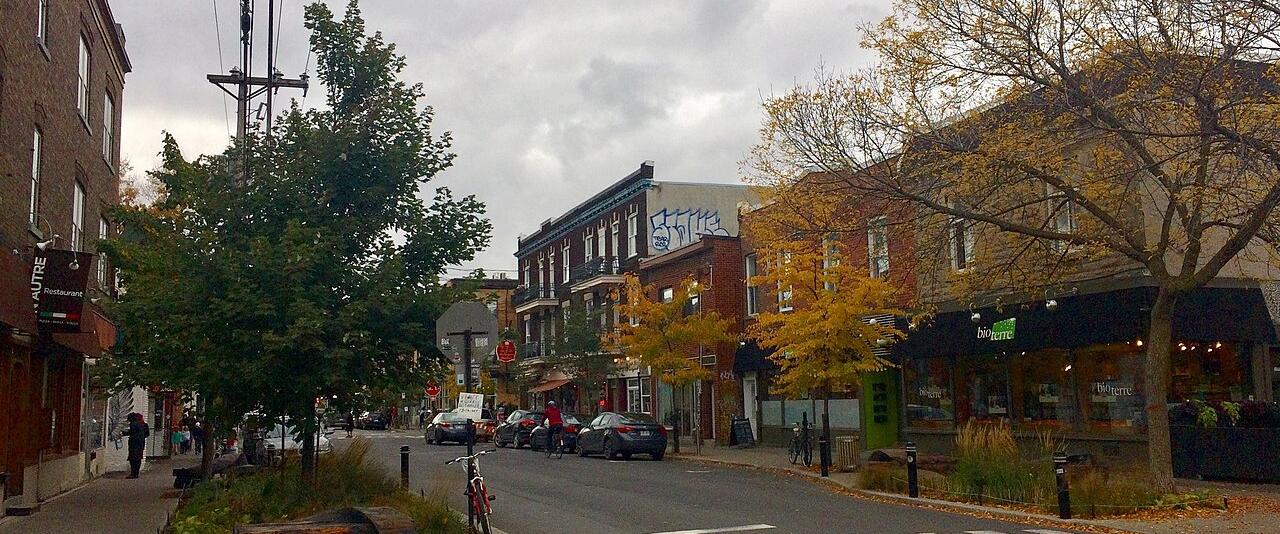
Mile End and the Plateau are the Montreal neighbourhoods most visitors end up wandering through without a plan: rows of brick duplexes and triplexes with outdoor staircases, corner cafés, bakeries and small shops. A loose route helps you see the best of them in half a day. This walk runs north to south, from Mile End down through the Plateau, and covers about 4 to 5 km on flat streets.
Getting Oriented
Both areas belong to the borough of Le Plateau-Mont-Royal, on the eastern side of Mount Royal, north of downtown. Mile End is the northern part, roughly between Avenue du Mont-Royal to the south and Avenue Van Horne to the north, Rue Hutchison to the west and Rue Saint-Denis to the east. The Plateau proper runs south from there towards Rue Sherbrooke.
Three metro stations on the orange line serve the area: Laurier, Mont-Royal and Sherbrooke. Laurier is the most convenient start for Mile End; Sherbrooke is a good end point. The 55 bus runs along Boulevard Saint-Laurent, and BIXI bike-share docks are spread through both neighbourhoods.
A Short History
Mile End takes its name from a 19th-century crossroads with a tavern. The railway arrived in 1876 and electric streetcars in 1893, and the village of Saint-Louis-du-Mile-End grew quickly until Montreal annexed it in 1910. For decades much of the area was industrial and part of the city's garment district.
Until the 1950s Mile End was Montreal's main Jewish neighbourhood. Greek and Portuguese communities followed, and a visible Hasidic community remains today. From the 1980s the area became known for musicians, writers and filmmakers, and gentrification followed in the 1980s and 1990s. The Plateau has a similar story: a working-class district in the early 20th century, then a magnet for artists, students and young professionals from the 1980s, with rising rents pushing many longtime residents out.
Mile End: Bagels, a Church and Side Streets
Start at Laurier metro and walk west along Avenue Laurier, then north into Mile End.
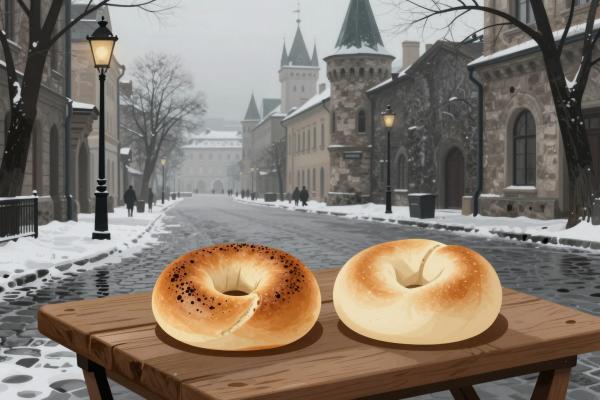
The bagel bakeries. Mile End is home to Montreal's two most famous bagel bakeries, Fairmount Bagel on Rue Fairmount and St-Viateur Bagel on Rue Saint-Viateur, a few minutes apart. Fairmount traces its roots to 1919 and St-Viateur to 1957. Montreal-style bagels are smaller and denser than New York bagels, made with egg and honey in the dough, boiled in honey-sweetened water and baked in a wood-fired oven. Buy them hot and eat one on the street; trying both and picking a side is a local habit.
Church of St. Michael and St. Anthony. At the corner of Rue Saint-Viateur and Rue Saint-Urbain, this church built in 1914–15 is the area's best-known landmark. Its design mixes Irish Catholic motifs with a Byzantine style, including a dome and a tall minaret-like bell tower that looks out of place among the duplexes. The parish originally served Irish Catholics and later the Polish community.
Saint-Viateur, Fairmount and Bernard. These east-west streets, together with Boulevard Saint-Laurent and Avenue du Parc, hold most of the cafés, bookshops, record stores and small restaurants. The comics publisher Drawn & Quarterly and Ubisoft's large Montreal studio are both based in Mile End, a sign of how the old garment buildings have been reused.
Down Saint-Laurent: The Main
Walk south along Boulevard Saint-Laurent, known as "the Main". For a century it was the street where new immigrants first settled, and it still marks the traditional line between the historically English-speaking west and French-speaking east of the city. Its shopfronts reflect waves of arrivals: Jewish, Portuguese, Greek and more recent communities.
If you want a detour, carry on a few blocks south of Avenue du Mont-Royal to Schwartz's, near Rue Napoléon, the delicatessen founded in 1928 and known for Montreal smoked meat. Expect a queue at lunchtime and on weekends.
The Plateau: Staircases, Avenue du Mont-Royal and Parc La Fontaine
Back at the corner of Saint-Laurent, head east along Avenue du Mont-Royal, the Plateau's main shopping street, with shops, cafés and the Mont-Royal metro station.
Turn off onto any of the side streets between Saint-Laurent and Saint-Denis, such as Rue de Bullion, Rue Henri-Julien or Rue Drolet, to see the Plateau's signature housing: two- and three-storey brick buildings with exterior spiral and straight staircases leading to upper-floor flats. Respect the residents and do not climb them.
Continue east to Parc La Fontaine, a large park with a pond, tree-lined paths and, in summer, an open-air theatre. It is a good place to rest before heading south.
Finishing at Square Saint-Louis
Walk south down Rue Saint-Denis, one of the city's main French-speaking commercial streets, to Square Saint-Louis, a small park with a fountain surrounded by colourful Victorian houses. From here, Sherbrooke metro is a short walk east.
Practical Tips
- When to go: Late spring to early autumn is best for walking. In winter the route still works, but the staircases are icy and the parks are quieter.
- Time: Allow three to four hours with stops for food and shops.
- Detour: Mount Royal Park and Parc Jeanne-Mance border the Plateau to the west if you want to add a climb to the lookout.
- Language: French is the main language in shops and cafés, though English is widely understood. A "bonjour" when you walk in is appreciated.