





What Makes a Montreal Bagel Different
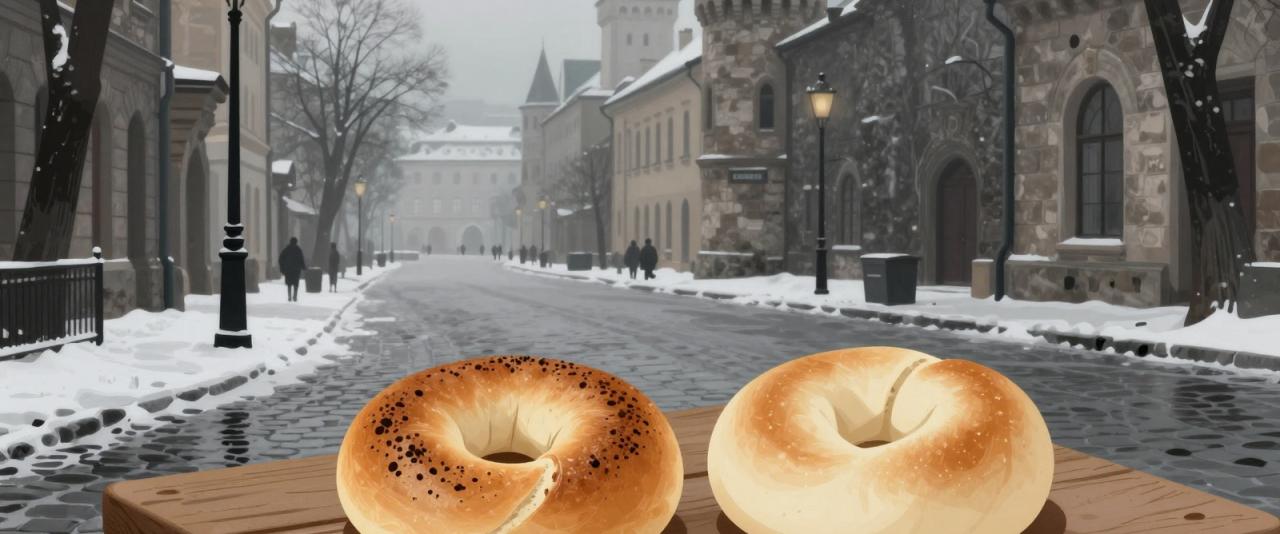
A Montreal-style bagel is smaller, thinner and sweeter than a New York bagel, with a larger hole and a denser, chewier crumb. The dough contains flour, malt, egg and honey, and traditionally no salt. Each bagel is hand-shaped, boiled briefly in honey-sweetened water, then baked in a wood-fired oven, which gives the crust its uneven colour and slight char.
There are two classic varieties: sesame (white seed) and poppy (black seed). Most bakeries also sell plain, everything, multigrain and other versions, but sesame is the one most Montrealers buy.
The style came with Jewish immigrants from Poland and elsewhere in Eastern Europe, who settled around Boulevard Saint-Laurent in the early 20th century. Two bakeries from that tradition still dominate the city's bagel scene, and both are in Mile End, a block apart.
Fairmount Bagel
Address: 74 Fairmount Avenue West, Mile End
Fairmount traces its origins to 1919, when Isadore Shlafman opened a bagel bakery in a lane off Boulevard Saint-Laurent, rolling bagels by hand and baking them in a wood-fired oven. The family later moved the business to Fairmount Avenue, where it has been ever since.
The shop is small and takeaway only: you walk in, order at the counter and watch bagels being rolled and slid into the oven behind it. Fairmount is known for offering a wider range of flavours than its rival, alongside the traditional sesame and poppy.
St-Viateur Bagel
Address: 263 Saint-Viateur Street West, Mile End
St-Viateur was founded in 1957 by Myer Lewkowicz, who had worked with Chaim (Hyman) Seligman, a baker credited by some historians with bringing the bagel to Montreal. The original shop on Saint-Viateur Street lists its hours as 6 a.m. to midnight every day.
Like Fairmount, the flagship is a working bakery with a counter and a view of the oven. St-Viateur also runs several cafés with seating, including one on Mont-Royal Avenue East, and a second Mile End bakery at 158 Saint-Viateur West.
Which One Is Better?
Both claim to be the oldest bagel bakery in Montreal, and locals tend to have firm loyalties. In practice the two bagels are made the same way and are much closer to each other than to anything sold outside the city. Differences people point to are mostly about texture and sweetness, and they vary from batch to batch depending on how long a tray spent in the oven.
The simplest approach is to buy a sesame bagel at each shop, a few minutes' walk apart, and compare them while they are still warm. Neither shop is a place to sit down for a meal; that is part of the tradition.
How to Order and What to Eat Them With
- Buy by the dozen or half-dozen. Both shops sell single bagels, but most customers buy a bag. A dozen goes quickly once opened.
- Eat them warm. A Montreal bagel is at its best within a few hours of coming out of the oven. Many people eat the first one on the pavement outside.
- Toppings. Cream cheese and smoked salmon are the classic pairing. Both shops sell spreads, but the bagels are also eaten plain.
- Payment. Have a card or cash ready and know your order before you reach the counter, as lines can move quickly at busy times.
Storing and Taking Bagels Home
Montreal bagels go stale faster than larger, salted bagels. If you are taking them home:
- Keep them in a paper bag for the first day, not plastic, so the crust stays crisp.
- Freeze any you will not eat within a day. Slice them first so you can toast them straight from the freezer.
- Reheat whole bagels briefly in a hot oven rather than a microwave.
Bagels are a common souvenir to carry out of Montreal. If you are flying, check the rules for food at your destination, especially for international travel.
Getting to Mile End
Mile End is north of the Plateau, roughly between Boulevard Saint-Laurent and Avenue du Parc. From downtown, the 55 bus up Boulevard Saint-Laurent or the 80 bus up Avenue du Parc both pass close to the bakeries, and the Laurier metro station on the orange line is a walk of 15 to 20 minutes. The neighbourhood is also known for its cafés, independent shops and murals, so the bagel stop fits easily into a longer walk.