Why Whitehorse Works for Aurora Viewing
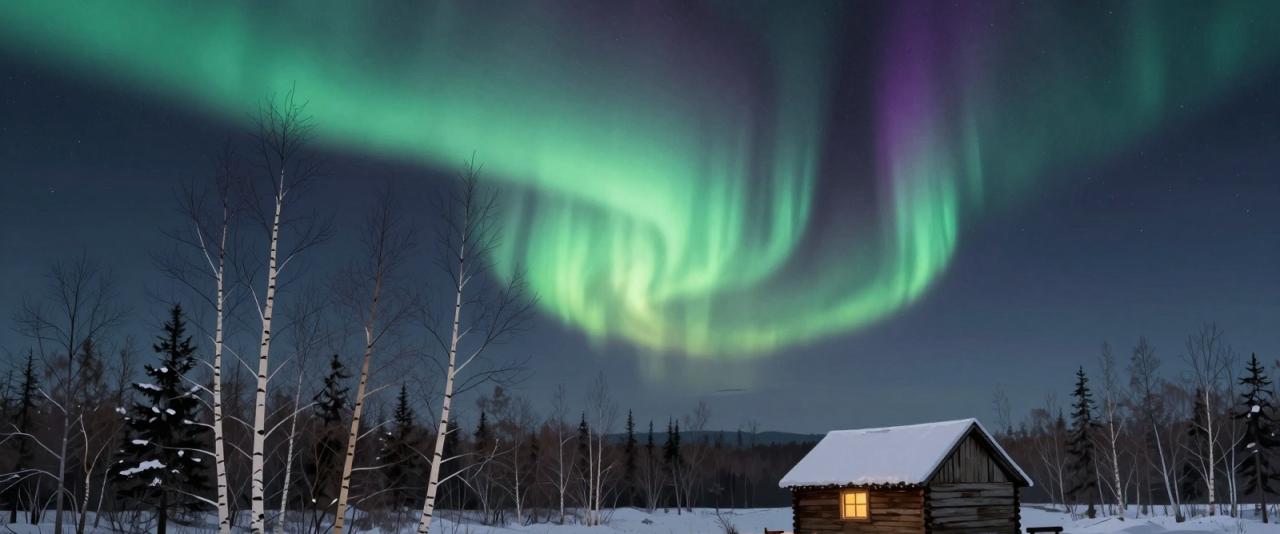
Whitehorse, the capital of Yukon, sits at about 60 degrees north, well placed under the band where the aurora borealis is most active. It is also easy to reach: Erik Nielsen Whitehorse International Airport has scheduled flights from Vancouver, Calgary and Edmonton, among others, so you can fly in, rent a car and be out under dark skies on the first night.
The city is small, with roughly 30,000 people, which means you do not need to drive far to escape its lights. Whitehorse is also known as Canada's driest city, and clear skies are the single most important condition for seeing the aurora.
When to Go
Travel Yukon describes the aurora season as running from August to April. It splits naturally into two periods:
- Autumn (mid-August to mid-October): milder nights, unfrozen lakes that can reflect the lights, and fall colours during the day.
- Winter (mid-October to early April): the main season, with long nights and the most hours of darkness, but serious cold.
From late spring through summer the sky never gets dark enough to see the aurora, because Whitehorse gets more than 19 hours of daylight around the solstice. Plan a stay of at least three or four nights, since cloud can cover the sky for days at a time and no single night is guaranteed.
Timing Your Night
Travel Yukon suggests the hours between 10 p.m. and 3 a.m. as the best viewing window. Activity tends to come in bursts, so a quiet sky at 11 p.m. can light up an hour later. Check the moon phase as well: a full moon brightens the sky and washes out fainter displays, so the days around a new moon are better.
Aurora forecasts help you decide when to stay up. Space Weather Canada publishes forecasts, and Travel Yukon links to aurora forecast sites. A Kp index of 3 or more often means good potential at Whitehorse's latitude, but local cloud cover matters just as much, so check the Environment Canada forecast alongside the aurora outlook.
Where to Watch
The lights can be visible from town on strong nights, but driving 20 to 30 minutes out of Whitehorse makes a large difference. Look for a pullout or open area with a clear view to the north, away from vehicle headlights. Frozen lakes and wide valleys give the open sky you want.
Do not park on the shoulder of a highway, and never walk onto lake ice unless you know it is safe. In winter, tell someone where you are going, carry a phone charger and keep the fuel tank well filled.
Tours and Aurora Lodges
Many operators around Whitehorse run evening aurora tours from autumn through early spring. These usually include hotel pickup, a heated cabin or tent at a dark site outside town, hot drinks and help with photography. Some lodges outside the city are set up specifically for aurora viewing, so guests can wait indoors and step out when the sky becomes active.
A tour is worth considering if you do not want to drive on icy roads at night or lack cold-weather clothing; some operators rent parkas and boots. Book directly through operators listed by Travel Yukon and read cancellation policies, because clouds can cancel a night.
Dressing for the Cold
Winter nights in Whitehorse are cold. The average January low is about minus 19 °C, and cold snaps can push temperatures below minus 40 °C. Standing still outside for an hour or more is much colder than walking around. Bring:
- A thermal base layer, an insulating mid layer and an insulated parka with a hood
- Insulated winter boots rated well below freezing, with wool socks
- Mittens over thin liner gloves, so you can still operate a camera
- A warm hat, neck gaiter and hand warmers
Photographing the Aurora and Daytime Plans
A phone in night mode can capture the aurora, but a camera on a tripod gives better results. Start with a wide-angle lens, the widest aperture available, an ISO of 1600 to 3200 and exposures of a few seconds to 15 seconds, then adjust. Cold drains batteries quickly, so keep spares in an inside pocket.
Since you will be up late, keep days light. In Whitehorse you can visit the SS Klondike sternwheeler, the Yukon Beringia Interpretive Centre and the MacBride Museum of Yukon History, or walk above Miles Canyon. The hot springs at Takhini, about 28 km from the city centre, are open in winter and host a hair-freezing contest on very cold days. The Yukon Quest sled dog race between Whitehorse and Fairbanks also runs in winter.