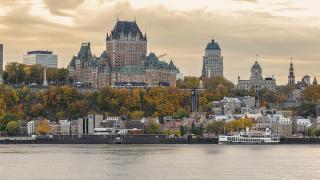

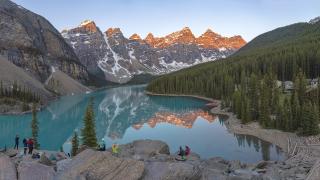
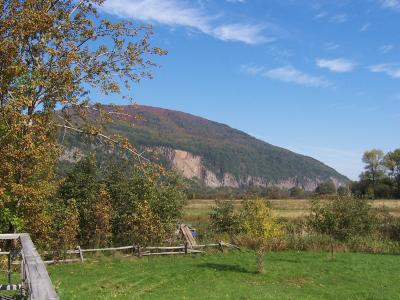
Saint-Joachim lies about fifty kilometres east of Quebec City on the Côte-de-Beaupré, where the Laurentian highlands drop to a narrow strip of farmland along the St. Lawrence. The setting is the main attraction. Behind the village the cape of Cap Tourmente rises abruptly in forested cliffs, while in front the river spreads out with the Île d'Orléans a short way across the channel.
The history of the area is tied to the earliest years of New France. Samuel de Champlain had a farm and trading post at Cap Tourmente in 1626, intended to feed the struggling settlement at Quebec. After the Company of New France granted the surrounding lands, the Séminaire de Quebec became the seigneur, and in the 1660s Bishop François de Laval established an agricultural and technical school here, among the first schools of its kind in the colony. The long strip farms that run from the highway toward the river, and the barns and stone buildings that remain, reflect the seigneurial system that shaped rural Quebec for two centuries.
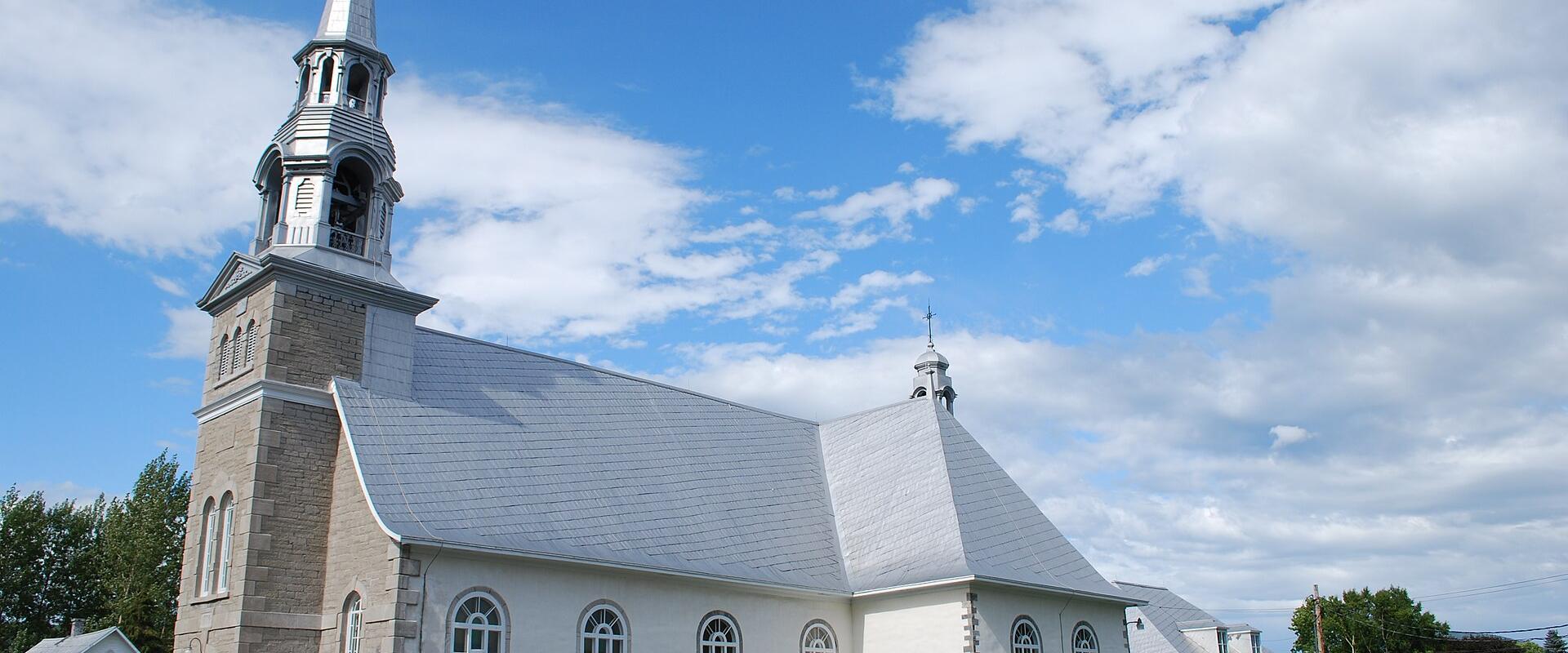
Today the village is quiet and mostly agricultural, with a parish church, a few inns and farm stands, and the traffic of Route 138 passing nearby. It is not a place of many sights in the town itself; the draw is the landscape and the wildlife just beyond it.
The Cap Tourmente National Wildlife Area, managed by the Canadian Wildlife Service, protects some 2,400 hectares of tidal marsh, meadow, wooded slope and cliffs. It is recognized internationally as a wetland of importance, and its autumn and spring bird migrations are the reason. Greater snow geese nest in the Arctic and stop on the St. Lawrence marsh in large numbers. In the cold early weeks of spring and again from late September into October, flocks arrive on the bulrush flats and feed at the shore. The spectacle is best on cool mornings and evenings, and at high tide the birds often lift off in great white waves.
A network of trails covers much of the reserve, and an interpretation centre explains the ecology and history of the site. Bring binoculars. In summer, forest trails shelter songbirds, and the meadows hold bobolinks and other grassland species. Deer, hares and sometimes porcupines turn up along the paths. Admission fees apply to the reserve, and rules protect the wildlife, so keep to the marked routes and leave pets at home.
The Sentier des Caps is the signature hike in the reserve. It climbs from the lowland trails up the face of the cape, a sustained ascent that rewards effort with views over the marsh, the river and the Île d'Orléans. The walk takes most of a morning or afternoon at an easy pace, and the upper sections can be wet or icy in spring and late autumn, so wear proper boots. On a clear day the sight of the broad St. Lawrence from above is memorable; in fog or low cloud the views vanish, so check the weather before you commit.
Other attractions within reach make Saint-Joachim a useful base. Sainte-Anne-de-Beaupré, with its large basilica and pilgrimage tradition, is a short drive to the west. Montmorency Falls, higher than Niagara, is on the way back to Quebec City, and the Mont-Sainte-Anne resort offers skiing in winter and mountain biking in summer. The Île d'Orléans, reached by a bridge near Quebec City, has farms, cider and vineyards, and can be combined with a day on the coast.
The best seasons are spring and autumn for geese and September for colour on the escarpment. Summer is good for hiking, though insects can be bothersome in the marshes. Winter is quiet; some trails remain open for snowshoeing, but check the reserve's schedule before travelling.
Most visitors drive from Quebec City along Route 138, which takes roughly an hour. Rural accommodation near the village includes bed-and-breakfasts and inns, many of them in older farmhouses, and booking ahead is wise during migration weeks.
Best time to visit
Mid-April to early May and again from late September to October for the greater snow goose migrations; June to August for hiking.
What to see in Saint-Joachim
Our picks first.
Saint-Joachim by interest
The same sights, grouped by what you came for.
Did you know?
Checked facts about Saint-Joachim, each with its source.
-
History
Jacques Cartier's 1535 Feast
In September 1535, French explorer Jacques Cartier landed at this location during his second voyage, where he celebrated with the local Iroquoian people who lived in a village known as Ajoaste.
Source: www.saintjoachim.qc.ca
Planning a visit to Saint-Joachim
Good to know
- Currency
- CAD
- Language
- English