
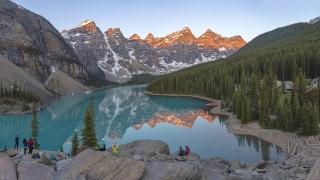
Canada has more wild land than almost anywhere on earth, and spending a night or two in the backcountry is one of the best ways to experience it. It also demands more preparation than car camping: help can be many hours away, weather changes fast, and you share the land with bears. This guide covers the basics for a first trip.
Where You Can Camp
There are three main kinds of wild camping in Canada.
National parks. Parks Canada manages backcountry camping in places like Banff, Jasper, Yoho, Pacific Rim and Gros Morne. In Banff, for example, a backcountry permit is mandatory for any overnight trip, in addition to the national park pass, and most people stay at designated backcountry campgrounds booked in advance through the Parks Canada reservation system. Random camping is allowed only in specific areas and under stricter rules.
Provincial parks. Many provinces offer interior or backcountry sites, often by canoe. Algonquin Provincial Park in Ontario is the best-known, with a huge network of lakes and portages and bookable interior campsites.
Crown land. Much of Canada is public Crown land. In Ontario, camping on most Crown land is free for Canadian residents for up to 21 days on any one site per calendar year. Most non-residents need a Crown land camping permit north of the French and Mattawa rivers. Rules vary by province, so check before you go.
Permits and Planning
Book early: popular backcountry campgrounds in the Rockies and interior sites in Algonquin fill quickly once reservations open. Check trail reports and closures before you leave, as bear activity, fire and washouts can close routes at short notice.
Always leave a trip plan with someone reliable: your route, campsites, expected return time and who to call if you are overdue. Carry extra food for at least one more day than planned. Mobile coverage disappears quickly outside towns, so a satellite messenger or personal locator beacon is a sensible investment for remote trips.
Gear for Canadian Conditions
Even in summer, mountain and northern nights can drop close to freezing, and snow is possible at higher elevations into early summer. Key gear:
- Shelter: A sturdy three-season tent with a good fly is enough for most summer trips; winter camping is a separate skill set.
- Sleep system: A sleeping bag rated comfortably below the lowest forecast temperature, and an insulated sleeping pad, since the cold ground draws heat away faster than air.
- Clothing: Synthetic or wool layers, an insulated jacket, a waterproof shell, a warm hat and gloves. Avoid cotton, which stays wet and cold.
- Cooking: A lightweight stove and fuel. Campfires are banned in many backcountry areas and during fire bans.
- Water treatment: A filter, chemical treatment or boiling. Clear-looking streams can carry Giardia, known locally as beaver fever.
- Navigation: Map and compass or a GPS with spare batteries; waymarking in the backcountry is often minimal.
- Bugs: Insect repellent and a head net. Blackflies in spring and mosquitoes in early summer can be intense.
Bear Safety
Black bears live across most of Canada, and grizzlies in the west and north. Most encounters end without incident if you follow the basics.
- Store all food, garbage, toiletries and cooking gear in the bear lockers or on the bear poles provided at designated campgrounds. Where there are none, use a bear-resistant container or hang food well away from your tent. In Banff's random camping areas, approved bear-resistant containers are mandatory for much of the year.
- Cook and eat away from where you sleep, and never keep food in your tent.
- Carry bear spray where you can reach it quickly, and learn how to use it before your trip.
- Make noise on the trail, especially near streams, berry patches and blind corners, and travel in a group where possible.
Leave No Trace
The seven Leave No Trace principles are the standard for backcountry travel in Canada: plan ahead and prepare; travel and camp on durable surfaces; dispose of waste properly; leave what you find; minimise campfire impacts; respect wildlife; and be considerate of others. In practice, pack out everything you bring, use outhouses or dig catholes well away from water, camp on established sites, and use a stove rather than building new fire rings.
A Good First Trip
For a first backcountry night, choose a short, well-used route to a designated campground a few hours from the trailhead, in July or August when conditions are most stable. A paddle-in site on an Algonquin lake or a short hike to a Rockies backcountry campground both work well. Once you are comfortable with your gear, food storage and navigation, longer and more remote trips become much less daunting.