



Planning a Museum Day in Toronto
Toronto's museums are spread across the city, but most of the major ones cluster in two areas: around Queen's Park and Bloor Street, and downtown near the waterfront. Grouping visits by area saves a lot of time on the subway.
Most museums have one or two days a week with shorter hours or closures, and several offer free or reduced admission at certain times. Check each museum's website before you go, as programmes change.
Royal Ontario Museum (ROM)
Where: 100 Queen's Park, at Bloor Street, next to Museum station on subway Line 1.
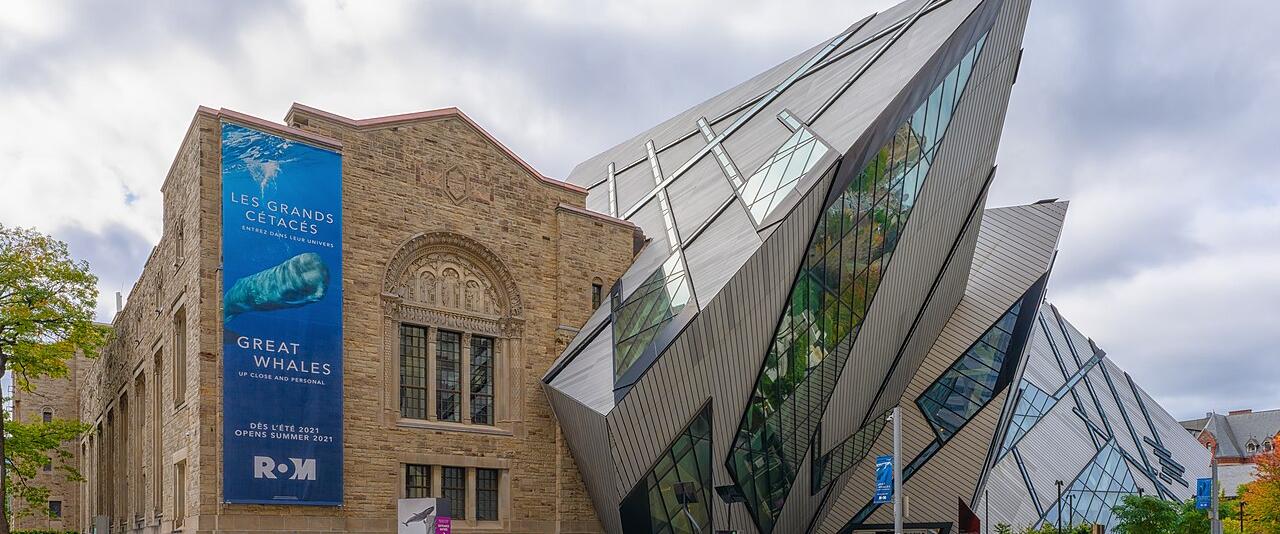
The ROM is Canada's largest museum and combines natural history with world cultures. Its best-known galleries cover dinosaurs, minerals and gems, ancient Egypt, and Chinese art and architecture. The angular glass-and-aluminium entrance, the Michael Lee-Chin Crystal designed by Daniel Libeskind, opened in 2007 and was added to the original 1914 building.
A first visit needs at least half a day. Pick two or three galleries rather than trying to see everything. The ROM is included in Toronto CityPASS, which may save money if you also plan to visit the CN Tower and other attractions on the pass.
Near the ROM: Gardiner and Bata Shoe Museum
Two smaller museums are a short walk away and work well with a ROM visit:
- Gardiner Museum – directly across Queen's Park from the ROM, devoted to ceramics, from ancient pottery to contemporary work.
- Bata Shoe Museum – at Bloor and St. George streets, covering footwear from many cultures and periods. It is more interesting than the subject suggests and takes one to two hours.
Art Gallery of Ontario (AGO)
Where: Dundas Street West, between University Avenue and Spadina Avenue, near St. Patrick station.
The AGO holds one of the largest art collections in North America, with a strong Canadian section that includes the Group of Seven, Indigenous art, European works and contemporary art. The building was redesigned by the Toronto-born architect Frank Gehry, with a long timber-and-glass gallery along Dundas Street and a spiral staircase at the back.
Admission tips:
- Admission is free on the first Wednesday evening of each month from 6 to 9 p.m. Tickets must be booked online in advance.
- Ontario residents under 25 can get free admission.
- An adult annual pass is currently listed at $40, which can cost less than a single-day ticket.
Aga Khan Museum
Where: 77 Wynford Drive, in North York, about 25 minutes by car from downtown.
Opened in 2014, the Aga Khan Museum focuses on the arts of Muslim civilisations, with manuscripts, ceramics, metalwork and textiles. The building, designed by Fumihiko Maki, sits in landscaped gardens. It is out of the way for most visitors, but worth the trip for anyone interested in Islamic art or architecture.
Downtown and Waterfront
- Hockey Hall of Fame – in Brookfield Place at Front and Yonge streets, close to Union Station. It covers the history of the sport and displays the Stanley Cup in a former bank building.
- Fort York National Historic Site – near the foot of Bathurst Street. The site where Toronto (then York) was founded in 1793, and where the Battle of York was fought in 1813 during the War of 1812. It has original military buildings and costumed interpreters in summer.
- Ontario Science Centre – its original building in Don Mills closed in June 2024. The centre has opened an interim location at Harbourfront Centre on the waterfront while a permanent site is built at Ontario Place, expected around 2029. Check its website for what is currently on offer.
Suggested Itineraries
- One museum day: ROM in the morning, lunch nearby, then the Gardiner or Bata Shoe Museum.
- Two days: Add the AGO and a walk through nearby Chinatown and Kensington Market.
- With children: The ROM's dinosaur galleries, the Hockey Hall of Fame and the Science Centre's interim site are the safest choices.
- Rainy day downtown: The Hockey Hall of Fame connects to the underground PATH network, so you can reach it from Union Station without going outside.
Most Toronto museums are closed or have reduced hours on certain weekdays, often Mondays, and on some public holidays. Weekend afternoons are the busiest times at the ROM and the AGO; arriving at opening time or visiting on a weekday morning gives you the galleries with fewer school groups and crowds.