


- Where
- Iqaluit, Nunavut
- Directions
- Directions
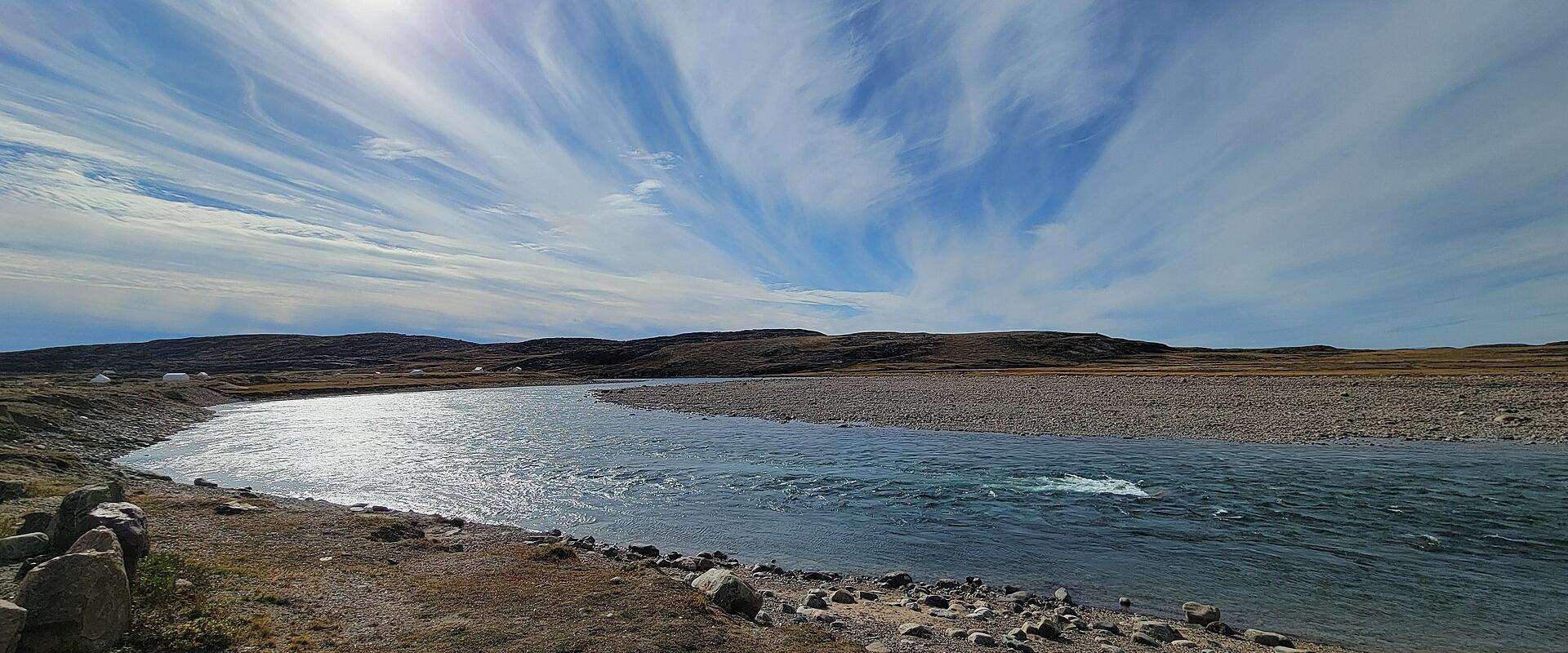
Sylvia Grinnell Territorial Park lies just west of Iqaluit, the capital of Nunavut, on the shore of Frobisher Bay on southern Baffin Island. It is a short walk or drive from the town, yet it feels like open Arctic wilderness, with treeless tundra, low rocky hills and a clear river rushing toward the sea. The park is managed by Nunavut Parks, and it is the most popular place for Iqaluit residents and visitors to get outdoors, whether for an evening stroll, a picnic or a day of berry picking in late summer. Its Inuktitut name is Kuunga, often translated as the river that is.
The river is the centre of the park. The Sylvia Grinnell River flows over a series of ledges and rapids, and near its mouth it reaches tidal water, where the fast current meets the huge tides of Frobisher Bay. The bay has some of the largest tidal ranges in the world, and the water level in the river changes dramatically over a few hours, leaving rocks and gravel bars exposed at low tide. Arctic char, the prized fish of the north, run up the river in the summer, and local families often come to fish. The name Iqaluit means place of many fish in Inuktitut, which reflects the importance of the char to the community.
The landscape was shaped by the glaciers of the last ice age, which scraped the bedrock and left boulder fields, rounded hills and scattered erratics. Walking trails and informal paths lead along the river and up onto the ridges, where views open out across the bay and the town. A picnic shelter and signs near the entrance give basic facilities, and cairns mark some of the routes. The terrain is open, so it is easy to see where you are going, but the ground can be uneven and boggy in places.
In summer, the tundra bursts into colour in a short season. Purple saxifrage, the territorial flower of Nunavut, blooms in early summer, and yellow Arctic poppies, pink dwarf fireweed and other hardy flowers appear among the rocks. Wildlife includes Arctic hares, Arctic foxes, ptarmigan, ravens, snow buntings and peregrine falcons, and with luck, visitors may see seals in the bay. Midsummer brings nearly endless daylight.
The park is about a half hour’s walk from the town centre, or a short taxi ride, and it is open to the public. Visitors should wear sturdy boots and warm layers, carry water and insect repellent, and respect the fragile tundra by staying on paths. Be aware that polar bears and other wildlife are present in Nunavut, and local advice on safety is worthwhile. The park suits walkers, birdwatchers, photographers and anyone who wants a first taste of the Canadian Arctic and the North.
Categories
More photos coming soon
Nearby Attractions
Other places to visit in Iqaluit

Questions people ask
Quick Facts
Best Time to Visit
Summer offers long daylight and tundra access; winter and spring trips require specialized planning.