


Oldman River Valley
- Where
- Lethbridge, Alberta
- Directions
- Directions
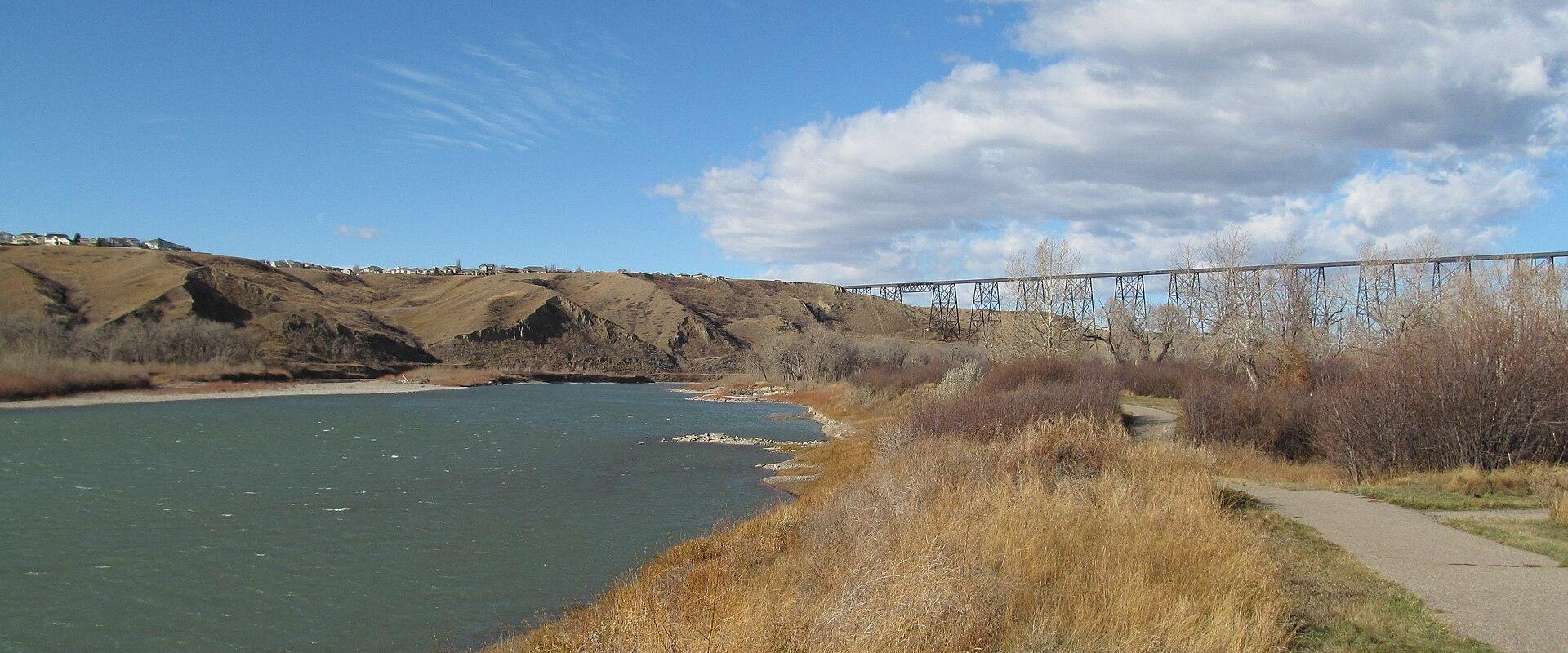
The Oldman River Valley cuts through the middle of Lethbridge, Alberta, and gives the city one of the most unusual settings on the Canadian prairies. The river has carved a broad, steep-sided valley roughly a hundred metres below the level of the surrounding farmland, and from the rim you look down onto a green strip of cottonwoods, grassland and water. A network of parks and trails fills much of the valley floor, so the river corridor works as the city's main natural area and recreational spine.
Geologically, the valley is part of the coulee country of southern Alberta. Meltwater from the Rocky Mountains runs east through the prairie, and over thousands of years it cut into soft sandstone and shale, leaving exposed banks, side coulees and badland-like slopes. The name Coalbanks was used for the area in early settlement days because seams of coal outcropped along the river, and the mines that grew up in the valley shaped the city's early economy.
The valley also carries deep Indigenous history. The Blackfoot confederacy has long lived in this region, and Indian Battle Park, within the valley, marks the 1870 battle between the Blackfoot and the Cree, often described as the last major battle between First Nations on the plains. Fort Whoop-Up, a reconstructed trading post of the 1870s, stands in the same park, and the High Level Bridge, a very long and tall railway trestle, crosses the valley above it.
Visitors come mostly for the outdoors, and the appeal is mostly outdoors. Paved and gravel trails run along the river and up the coulee slopes, and they are used for walking, running and cycling. The cottonwood forest along the water is notable, since several poplar species grow and interbreed here, producing a distinctive riverside woodland. Deer, hawks and owls are frequently seen, beavers work the river banks, and a long list of birds passes through during migration. The Helen Schuler Coulee Centre, a nature centre within the river valley, offers displays and walks on local ecology.
The best seasons are late spring through autumn, when the trees leaf out and the light on the coulee walls is warm; winter brings quiet, snow-covered trails and frosted cottonwoods. Wind is a constant on the prairie, so a jacket is wise year-round. The valley suits walkers, birdwatchers, cyclists and anyone interested in the landscape and history that sit beneath the city, and it is easily combined with a visit to Fort Whoop-Up and the High Level Bridge.
Categories
More photos coming soon
Nearby Attractions
Other places to visit in Lethbridge
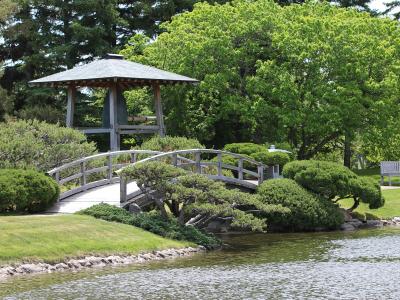
Lethbridge College Botanical Garden
Botanical garden on Lethbridge College campus
Culture & Leisure
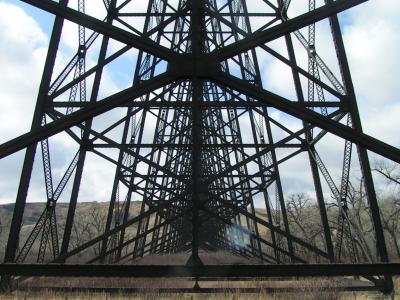
High Level Bridge
Free History & Heritage · Transportation
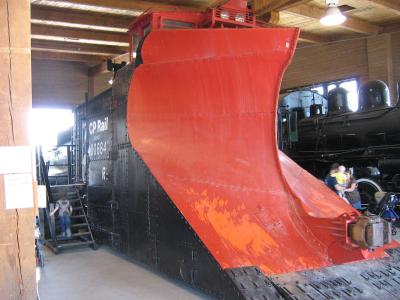
Lethbridge Heritage Railway
Heritage steam train in Lethbridge, Alberta
History & Heritage · Transportation
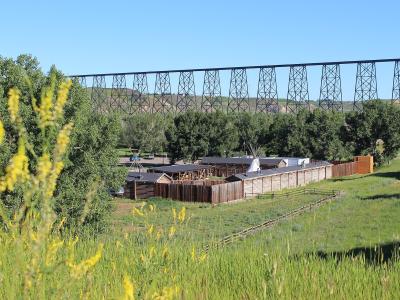
Fort Whoop-Up
Castles & Forts · Educational Sites
Questions people ask
Quick Facts
Best Time to Visit
June through September offers warm, sunny weather ideal for outdoor exploration.