


- Admission
- Free admission ended September 7
- Where
- Gaspé, Quebec
- Directions
- Directions
Forillon National Park occupies the very tip of the Gaspé Peninsula in eastern Quebec, where the Appalachian Mountains finally run into the Gulf of St. Lawrence. It was established in 1970 and opened to the public a few years later, and it was Quebec’s first national park. Parks Canada manages it, and it protects about 245 square kilometres of cliffs, forest, pebble beaches and sea. The name is thought to refer to a rock stack that once stood near the shore. The creation of the park meant that many local families who lived and fished here had to leave, a painful chapter that is part of the story of the place.
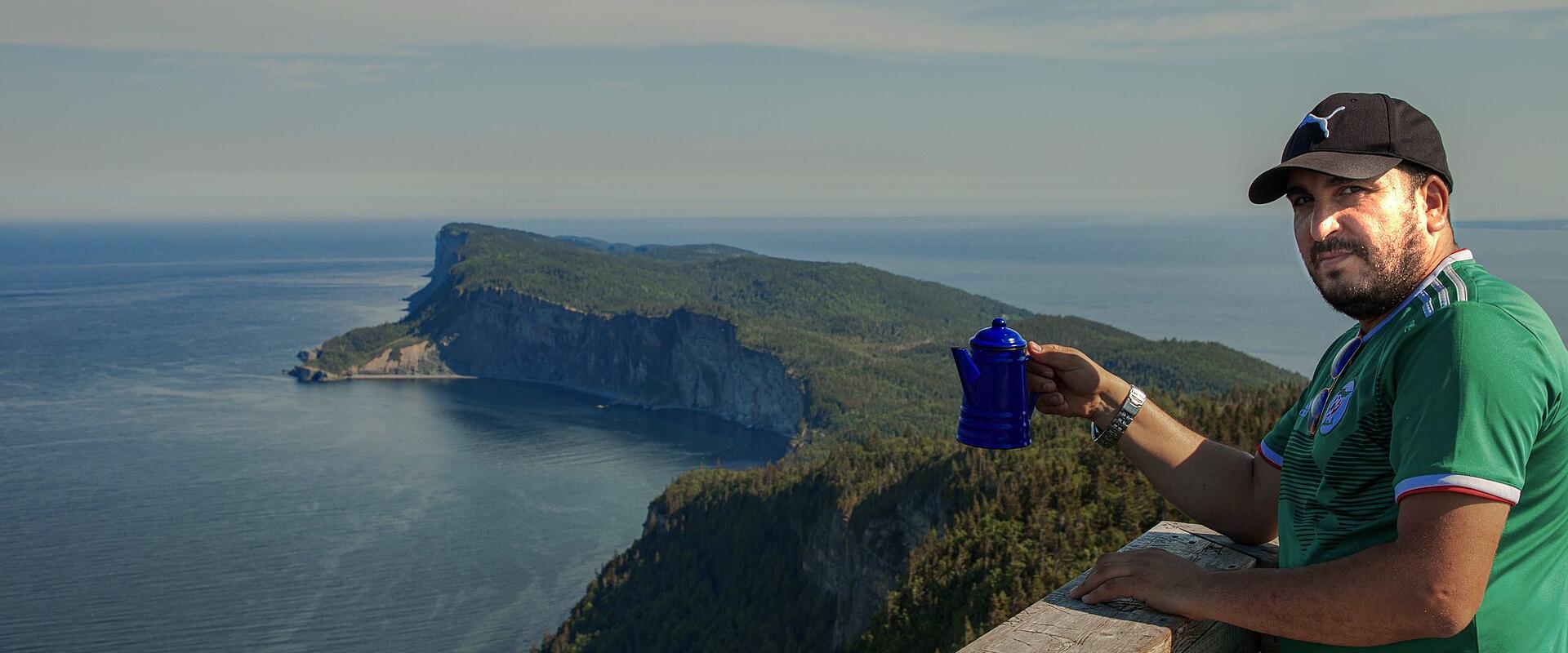
The scenery is dramatic. Limestone cliffs, among the tallest on the Gaspé coast, drop straight into the sea at Cap-Bon-Ami and along the southern shore, and at the extreme tip, Cap-Gaspé marks the end of the Appalachian range, with a lighthouse and views out toward the open Gulf. Inland, forested hills and valleys shelter moose, black bears, red foxes and porcupines, and the park is home to northern species of plants rare in the rest of Quebec. Seabirds nest on the cliffs, and grey seals haul out on rocks near Cap-Gaspé, where they can be seen from viewpoints and boats.
Hiking is the main activity, and there are trails for all levels. Les Graves is a coastal route along the shore, passing old fishing stations and pebble beaches, while other paths climb to lookouts over the cliffs and the bay. Cycling, sea kayaking and whale watching are also popular, and the waters off the park are good for spotting minke, fin and sometimes humpback and blue whales in summer. In winter, the park opens its trails for snowshoeing and cross-country skiing.
The park also preserves a human story. The Grande-Grave heritage site is a restored fishing hamlet, with houses, a general store and a cod-drying area, that recalls the era from the 1700s through the 1900s when cod fishing dominated the coast. Anglo-Norman, Irish, Scottish and French-Canadian families settled here, and costumed interpreters and displays explain how they lived. The land is also part of the traditional territory of the Mi’kmaq, whose presence goes back thousands of years, and the park acknowledges that Indigenous heritage.
Camping, cabins and visitor centres give choices for staying, and the park is entered through the town of Gaspé or from the north side at L’Anse-au-Griffon. Visitors should check Parks Canada’s information on entry fees, camping and seasonal access, as services vary. The park suits hikers, wildlife watchers and families, and a full visit takes a day or more. Bring layers, rain gear and binoculars, and keep a safe distance from wildlife.
Categories
More photos coming soon
Admission Fees
- Admission
- Free admission ended September 7
Hours and prices change, especially out of season. Check with the venue before you go.
Nearby Attractions
Other places to visit in Gaspé
Questions people ask
Quick Facts
Best Time to Visit
June through September offers warm weather ideal for exploring the region.